St Barts Weather By Month: A Boat Tour Planning Guide
Official Meteo-France climate normals show St Barts stays warm all year, but rainfall swings from 38.4 mm in February to 135.6 mm in October, and that swing decides which months suit a boat day.
Short answer
St Barts averages monthly highs of 28.5 C in January to 31.7 C in September. Rainfall is lightest in February at 38.4 mm and heaviest in October at 135.6 mm. Hurricane season runs 1 June to 30 November, peaking mid-August to mid-October, so the driest boat months are February to April.
St Barts sits close enough to the equator that every month is warm, which is why the island reads as a year-round destination in most travel copy. The real planning question is not temperature but water: Meteo-France's 1991 to 2020 climate normals for the Saint-Barthelemy station show monthly rainfall ranging from 38.4 mm in February to 135.6 mm in October, a three-and-a-half-fold swing that directly shapes how a boat day, a snorkelling stop and a ferry or charter crossing feel. This guide translates those verified numbers into decisions, month by month, and folds in the one caveat that matters most: the Atlantic hurricane season, 1 June to 30 November with its peak from mid-August to mid-October, overlaps the entire back half of the year.
The site's roster reflects that reality in its own way. Of the six live products listed here, the only per-person option, the group boat day from Simpson Bay, runs 12 May to 31 August 2027 only, squarely across the opening of hurricane season, while the five private charters, from the full-day Anse Marcel charter to the overnight catamaran, are priced per group and booked around whatever the sky does. More on how each fits the calendar below.
What Is The Weather Like In St Barts Month By Month?
Month by month, St Barts is warm everywhere on the calendar: average highs run from 28.5 C in January to 31.7 C in September, and average lows never drop below 23.3 C. The variable that actually changes your plans is rain, which runs from a February low of 38.4 mm to an October high of 135.6 mm, with the wettest three months being September through November.
The figures below come from the Meteo-France Antilles-Guyane station at Saint-Barthelemy, using the 1991 to 2020 normals published in the station's climate sheet. They are 30-year averages, not forecasts, which is exactly why they are useful for planning: a normal tells you what a month typically delivers, while a forecast tells you what next Tuesday delivers. Book a boat for a February week and the odds favour dry, breezy conditions; book the same trip in October and the monthly average alone warns you that showers are part of the picture.

| Month | Avg high (C) | Avg low (C) | Avg rainfall (mm) |
|---|---|---|---|
| January | 28.5 | 23.5 | 52.6 |
| February | 28.6 | 23.3 | 38.4 |
| March | 29.0 | 23.5 | 41.4 |
| April | 29.8 | 24.2 | 50.9 |
| May | 30.7 | 25.1 | 61.7 |
| June | 31.2 | 25.9 | 56.0 |
| July | 31.2 | 26.0 | 80.4 |
| August | 31.6 | 26.3 | 79.6 |
| September | 31.7 | 26.2 | 96.9 |
| October | 31.4 | 25.8 | 135.6 |
| November | 29.9 | 25.0 | 118.6 |
| December | 28.9 | 24.1 | 79.2 |
Read the table as three blocks rather than twelve rows. January to April is the drier period, with every month under 53 mm. May to August sits in a middle band, warm and increasingly showery but rarely written off. September to November is the wet stretch, when the three heaviest months of the year stack together. The full normals, including the annual rainfall total of 891.3 mm, are published in the Meteo-France station climate sheet, which is the primary source for every number here.
One thing this data deliberately does not tell you: sea state, wind and visibility. No verified series exists for those around St Barts in our sources, and sea conditions vary day to day regardless of the month. Operators make the call on the day, and every charter listing here carries a cancellation policy, which is the practical hedge against a rough morning.
Which St Barts Months Are Best For Boat Tours And Snorkelling?
For a boat and snorkelling day, February to April is the strongest window on paper: it combines the three driest months of the year, 38.4 to 50.9 mm, with comfortable highs of 28.6 to 29.8 C. May still works, at 61.7 mm, while the September to November stretch carries 96.9 to 135.6 mm and belongs to travellers flexible about timing.
A dry month matters more for a boat day than a warm one, because every month is warm. What rainfall actually changes is the texture of the trip: whether the run from St Martin to Gustavia feels like a long lunch or a damp crossing, and whether an afternoon anchored off Colombier is swim gear or rain gear. The snorkelling itself does not switch off, the marine reserve and its 23 marked dive sites are there in every month, but the comfort margin narrows as the rainfall column grows.
| Period | Rainfall character | Highs (C) | What it means for a boat day |
|---|---|---|---|
| Jan to Apr | Driest quarter, 38.4 to 52.6 mm | 28.5 to 29.8 | Widest comfort margin, best odds for dry deck time |
| May to Aug | Middle band, 56.0 to 80.4 mm | 30.7 to 31.6 | Hot and workable, showers possible, hurricane season open |
| Sep to Nov | Wettest stretch, 96.9 to 135.6 mm | 29.9 to 31.7 | Peak-season storm risk, keep plans flexible |
Match that to what is actually bookable and the picture sharpens. The shared group day from Simpson Bay, the Gustavia, Colombier Beach and Ile Fourchue tour at from $189 per person plus a US$20 government fee, runs only 12 May to 31 August 2027, so its season is entirely inside the middle band and the first half of the wet stretch. The private options have no such printed window. The full-day St Barth private charter from Anse Marcel, from $1,947.52 per group for up to 10, runs about 8 hours with stops at St Jean Beach and Gustavia, a shape that suits the drier months when deck time is the point of the day. For a fuller comparison of hulls and formats, see our guide to St Barts boat tour options.
Weather also argues for a private format in the shoulder months, though not for the reason people assume. A shared departure runs on a fixed clock; a private charter can shift its day around a shower, linger through a long lunch in Gustavia and reorder the stops. The Paper Boat Charter's 8-hour motor charter, from $2,100 per group for up to 8 and rated 5.0 across 17 reviews, is the one listing on the roster with enough reviews to quote a rating at all, and its inclusions read as built for variable skies: unlimited beer, wine and soft drinks, a giant floating mat and snorkelling gear, with lunch and gratuities excluded.
Between those, the same operator's 7.5-hour sailboat charter, from $2,000 per group for up to 8, is a separate listing, not a repackaged one: an open bar and snacks on a sailing format with free cancellation up to 24 hours before. A sailing hull leans on the wind, which no climate normal predicts, so treat it as a fair-weather format with a late-decision escape hatch.
When Is Hurricane Season In St Barts?
The Atlantic hurricane season runs 1 June to 30 November, with peak activity from mid-August to mid-October and the statistical maximum near 10 September. For St Barts that means June and July sit inside the season but outside its peak, while mid-August through mid-October carries the highest risk weeks on the calendar.
Those dates are the National Hurricane Center's definition, published by NOAA's tropical cyclone climatology page, not a local observation. A season is a probability envelope, not a promise: quiet Septembers happen and stormy Julys happen. What the envelope does tell a planner is where to weight caution. A trip booked for late February carries essentially no seasonal storm risk; the same trip booked for the third week of September sits inside the statistical peak of the peak.
The wet-season rainfall numbers and the storm calendar reinforce each other. The three wettest months, September at 96.9 mm, October at 135.6 mm and November at 118.6 mm, are also the three months deepest inside the hurricane season's second half. Nobody should read that as "October is ruined"; it means October plans deserve refundable bookings and a weather eye, which is standard practice in the Caribbean and which the listings here largely accommodate.
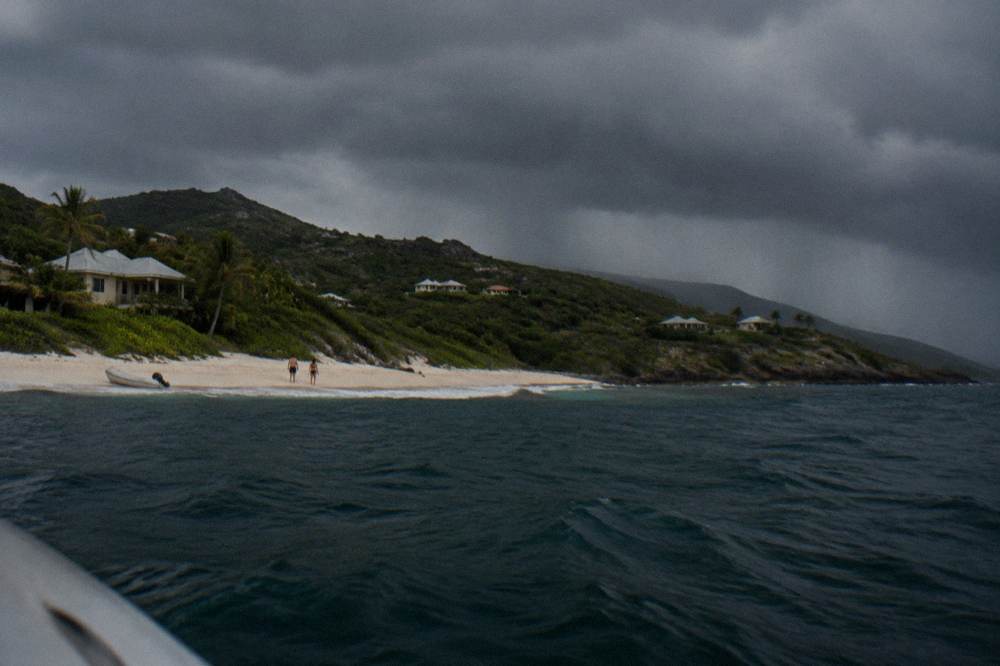
Two policy details from the roster matter for storm-season planning. The overnight catamaran, 2 days and 1 night from St Martin at from $4,816.09 per group for up to 4, offers a full refund up to 6 days in advance, a longer runway than the same-day products. The group boat day from Simpson Bay, conversely, ends its 2027 season on 31 August, the last day of the meteorological summer, so its entire run overlaps only the front half of hurricane season rather than its peak. For how that plays out on the water between the two islands, our piece on sea conditions between St Martin and St Barts goes deeper.
| Listing | Format and price | Weather-relevant policy |
|---|---|---|
| Gustavia, Colombier and Ile Fourchue tour | Group day, from $189 per person plus US$20 fee | Runs 12 May to 31 Aug 2027, free cancellation listed |
| Full-day St Barth private charter | Private, from $1,947.52 per group up to 10 | Free cancellation listed |
| Paper Boat 8-hour charter | Private, from $2,100 per group up to 8 | Free cancellation listed |
| Nikki Beach private charter | Private, from $2,120 per group, max 15 | Free cancellation listed |
| Overnight catamaran (Zephyr) | Private, from $4,816.09 per group up to 4 | Full refund up to 6 days ahead |
| Paper Boat sailboat charter | Private, from $2,000 per group up to 8 | Free cancellation up to 24 hours before |
How Should You Plan Around Rainfall In St Barts?
Plan around rainfall by front-loading outdoor time in February to April, treating May as a value month with 61.7 mm of rain, and booking the wet stretch, September at 96.9 mm through November at 118.6 mm, only with refundable rates. February is the single driest month at 38.4 mm, October the wettest at 135.6 mm.
Rainfall averages mislead in one specific way: a month's total often arrives in short, heavy bursts rather than all-day grey. That is the character of tropical showers, and it is why a wet-month boat day can still deliver hours of sun between downpours. The planning response is not avoidance but structure: anchorages with somewhere to shelter, an itinerary that can swap a beach stop for Gustavia, and a captain who reads the sky rather than the brochure.
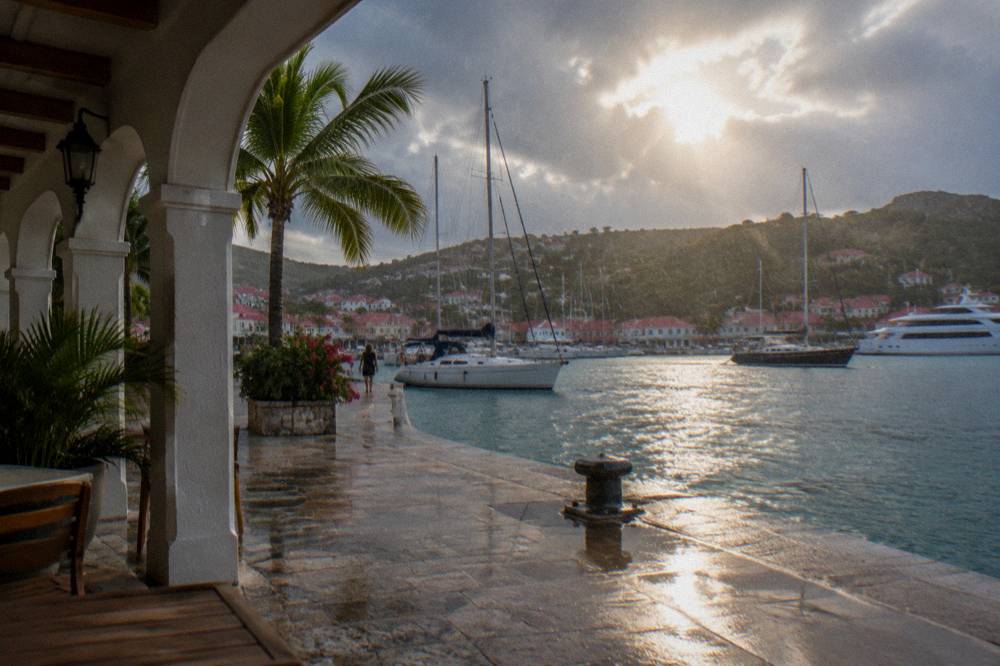
The Nikki Beach private charter from Sint Maarten shows how a wetter-month day can be built. At from $2,120 per group for up to 15, over 6 to 8 hours, its inclusions are round-trip private transfer, an open bar, beers, sodas, snacks and bottled water, with gratuities and customs clearance fees excluded. That is a day designed to work under a roof as well as an awning, which is what you want when the rainfall column reads triple digits. Travellers weighing the whole budget question may find our St Barts boat tour price comparison useful alongside this calendar.
A second, quieter planning lever is arithmetic rather than weather. Five of the six listings are priced per group, from $1,947.52 to $4,816.09, and split across their stated group maximums the same boats work out to per-guest figures that can sit near the $189 group day price. That is plain division of published prices, not a discount claim, but it means a full group of eight or ten can treat a private, weather-flexible day as the default rather than the upgrade, in any month.
How Does St Barts Weather Affect Crossings From St Martin?
Weather affects the St Martin to St Barts crossing mainly through the season: the dry February-to-April quarter offers the calmest statistical backdrop, while the September-to-November wet stretch brings both the heaviest rainfall and the hurricane season's peak. Every crossing, ferry or charter, is a weather-day decision made by the operator, not the calendar.
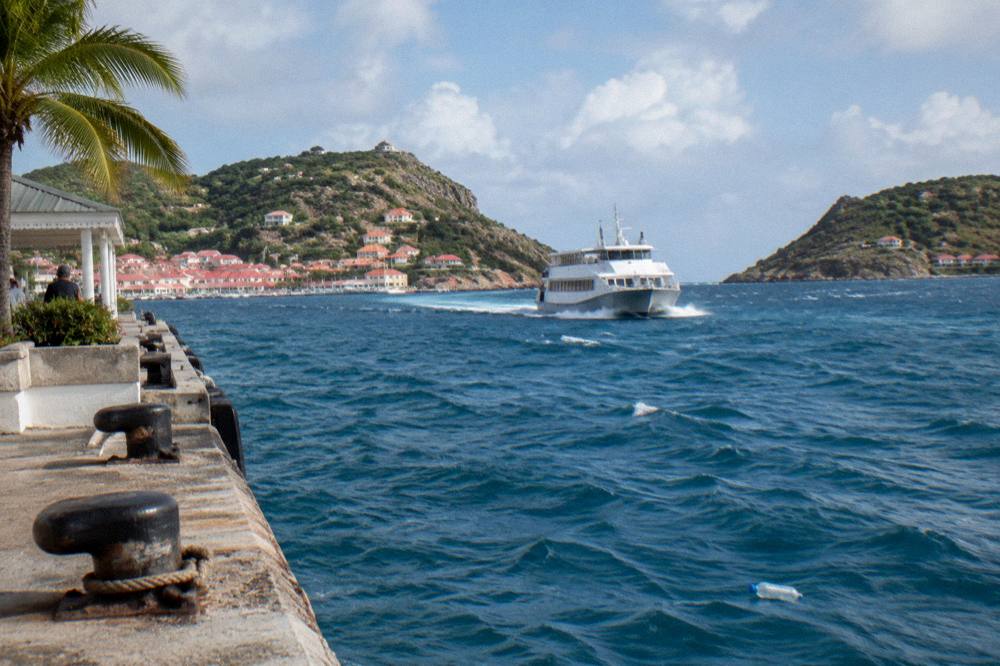
On the scheduled side, which this site does not sell, two operators run the crossing from St Martin: Great Bay Express from Bobby's Marina in Philipsburg, and Voyager from the Marigot Ferry Terminal on the French side. Great Bay Express asks passengers to arrive 45 minutes before departure, closes check-in 15 minutes before, and requires a passport from every passenger. Crossing times, sailing days and fares are not published as static figures on the operators' pages, so they are checked live at booking rather than planned from a number. Our ferry guide for the St Martin to St Barts crossing covers the practical mechanics.
On the charter side, the Anse Marcel full-day departure and the Simpson Bay group day both cross open water between the islands, and both stop inside the marine reserve, where the reserve authority caps speed at 5 knots in its waters. That speed limit, published with the reserve's zone rules at the French environment agency's regulation page, shapes the final approach into bays like Colombier regardless of the month. The reserve also bans jet skis, seabobs and any thermal or electric propulsion device in its waters, which is why no such product exists around St Barts at all.
For travellers who want the crossing itself to be the day, the format choice in wet months leans private: a charter can hold in shelter, reroute or extend a Gustavia lunch, where a scheduled sailing leaves when it leaves. In the dry quarter the difference narrows to comfort and price, which is a question of day-trip value from St Maarten more than weather. The full-day private charter remains the roster's weather-flexible anchor: about 8 hours, up to 10 guests, soda, snorkelling gear, fuel, a paddle board and a floating mat included, with dock fees at St Barthelemy of 40 EUR per boat plus 5 EUR per guest paid separately.
Which St Barts Month Should You Actually Book?
For the best statistical odds, book February to April: three of the four driest months, highs of 28.6 to 29.8 C, and no hurricane season exposure. For value with acceptable risk, May or early June. For the group boat day specifically, the calendar decides for you, it runs 12 May to 31 August 2027 only, and late May beats late August on both rainfall and storm-peak proximity.
A month choice also collides with the events calendar, which clusters in the good weather. The Music Festival's 43rd edition, 8 to 18 January 2027, sits in a 52.6 mm month. The Bucket Regatta, mid-March 2027, fills Gustavia's harbour during a 41.4 mm month. The Gourmet Festival, announced for 9 to 15 November 2026, is the one major event planted firmly in the wet stretch, a reminder that the island's social season and its driest air are not the same thing.
| If you want | Best months on the data | Notes for planners |
|---|---|---|
| Driest deck time | Feb to Apr | 38.4 to 52.6 mm, mild highs, no hurricane season |
| Warmest water and air | Jul to Sep | Highs 31.2 to 31.7 C, but peak storm risk from mid-August |
| The $189 group day | Late May to mid-July | Inside its 12 May to 31 Aug 2027 window, ahead of the mid-August peak |
| Event-linked travel | Jan, mid-Mar, early Nov | Music Festival, Bucket, Gourmet Festival respectively |
| Quietest island | Sep to Oct | Wettest months, 96.9 to 135.6 mm, book refundable rates |
Whichever month wins, the booking mechanics are the same: check the operator's live listing for the dates you actually hold, since seasonal windows and availability move. St Barthelemy Tours keeps this roster to the six real products, five private charters and one per-person group day, so every option on the calendar above traces back to a bookable listing rather than a wishlist.
The sailboat charter earns its slot for late deciders. Its free cancellation runs to 24 hours before departure, the tightest-to-the-day policy on the roster alongside the others listed above, and its open bar and snacks suit a private party of up to 8 who would rather watch the forecast and commit late than lock a date months out. In February that caution is needless; in October it is the whole game.
Common Questions About St Barts Weather
What Is The Weather Like In St Barts Month By Month?
Average highs run from 28.5 C in January to 31.7 C in September and lows never fall below 23.3 C, so every month is warm. Rainfall is the real variable: from 38.4 mm in February to 135.6 mm in October, with September to November the wettest stretch.
When Is Hurricane Season In St Barts?
The Atlantic hurricane season runs 1 June to 30 November, with peak activity from mid-August to mid-October and the statistical maximum near 10 September. June and July sit inside the season but outside its peak.
What Is The Driest Month In St Barts?
February, averaging 38.4 mm of rain across the 1991 to 2020 Meteo-France normals. March, at 41.4 mm, is close behind, and January and April both stay under 53 mm.
What Is The Wettest Month In St Barts?
October, averaging 135.6 mm. November follows at 118.6 mm and September at 96.9 mm, and all three sit inside the hurricane season's second half.
Does The Group Boat Day Run All Year?
No. The only per-person boat day on this roster runs 12 May to 31 August 2027, from $189 per person plus a US$20 government fee paid separately. Outside that window the bookable options are the private charters.
Which Months Are Best For A Boat Tour In St Barts?
February to April, on the data: the driest quarter of the year with highs of 28.6 to 29.8 C and no hurricane season exposure. May is a workable value month at 61.7 mm of rain.