How Rough Is The Sea Between St Martin And St Barts?
An honest look at sea state on the St Martin to St Barts crossing: what varies, what the reserve and forecast data say, and what the boat listings offer instead of the ferry.
The Atlantic hurricane season runs officially from 1 June to 30 November, with peak activity from mid-August to mid-October, according to the NOAA National Hurricane Center. That single fact shapes the sea between St Martin and St Barts more than anything else a traveller can control, because the crossing sits open to the Atlantic on one side and sheltered by islands on the other, and the same route can be glass-flat in February and genuinely uncomfortable in September.
We compared the listings for everything bookable on this route, and the honest answer is that no number describes the sea state, because none exists as a fixed figure. What does exist is climate data, reserve rules, operator cancellation policies, and a set of crossings with very different hull shapes. The full-day Anse Marcel charter, the Paper Boat charters and the group boat day from Simpson Bay all make the same crossing in different ways, and choosing between them is the single biggest lever a nervous sailor has.
The sea on the St Martin to St Barts crossing varies with season, wind direction and boat type, and no fixed figure describes it. Meteo-France normals show the drier months of January to April and the wetter stretch of September to November, and the Atlantic hurricane season runs 1 June to 30 November with a peak from mid-August to mid-October. If sea conditions have you weighing other islands within easy reach of St Martin, this guide to Anguilla versus St Barts compares beaches, prices and boat access to help you pick a day trip.
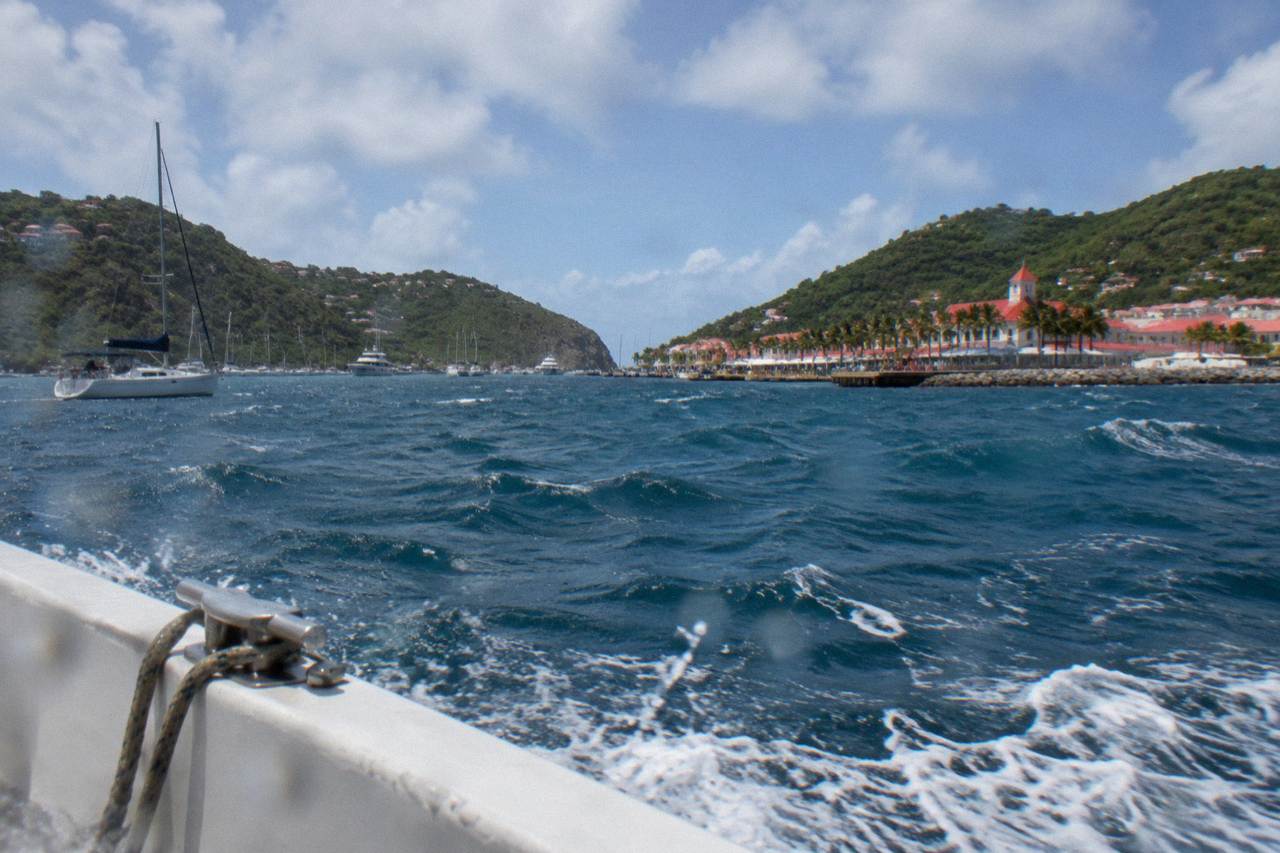
The first thing to understand is that "the crossing" is really two bodies of water. Leaving Simpson Bay, Anse Marcel or Grand Case on the St Martin side, boats pass along the leeward shore, then cross the open channel between the two islands before easing into the shelter of Gustavia's approaches. Conditions on the channel leg are what people remember, and they depend on the trade winds, any swell running down the Atlantic, and the tide state at the moment you cross. None of that is fixed, and any article printing a metre figure or a "usually 1 to 2 metres" claim is inventing precision that the official sources do not publish.
What the verified climate record does say is more useful anyway. The Meteo-France station at St Barthelemy, in its 1991 to 2020 climate normals, shows the drier period from January to April, with rainfall of roughly 38 to 52 mm per month, and a wetter period from September to November, with 96.9 to 135.6 mm in the peak months. October is the wettest month of the year at 135.6 mm, February the driest at 38.4 mm. Rain totals are not wave heights, but they track the wider pattern: the months with the most weather are the months with the most sea.
The second variable is the boat. A 15-person day boat out of Simpson Bay, a private motor charter from Anse Marcel and a sailing catamaran from Grand Case meet the same water with different motions, and the listings reflect that by selling different experiences rather than promising different seas. No listing on this route guarantees a condition, and none should; what they do offer is cancellation terms, which matter more on this crossing than almost anywhere else in the Caribbean.
If the question behind the question is whether to cross at all, the three listings below cover the realistic spread: a private charter for up to 10, the only per-person group day on this route, and an 8-hour Paper Boat private charter rated 5.0 across 17 reviews.
How Bad Is The Ferry From St Martin To St Barts?
The ferry crossing's difficulty varies with weather and season, and no verified crossing time, fare or comfort figure exists for the scheduled ferries, so we do not print one. What is verified is procedural: Great Bay Express departs Bobby's Marina in Philipsburg, requires a passport from every passenger, and asks you to arrive 45 minutes early with check-in closing 15 minutes before departure.
The honest position on the ferry is that we cannot tell you how bad it is on any given day, and neither can any page that prints a number. The ferry operators publish their schedules and fares through dynamic booking engines rather than static pages, and crossing times are simply not confirmed on the official sites we checked. Great Bay Express sails from Bobby's Marina on the Dutch side; Voyager sails from the Marigot Ferry Terminal on the French side. Both run their real-time availability through their own systems, and both emphasise that schedules can vary with weather.
What can be said is structural. A ferry is a bigger, faster, scheduled vessel, which means it crosses when the timetable says so, not when the sea is kind. Private charters on this route work the opposite way: the departure window is yours, and a skipper can time the channel leg around conditions in a way a ferry timetable cannot. That difference is exactly why people who worry about the crossing often end up on the full-day private charter out of Anse Marcel or the Paper Boat private charter rather than the ferry, and it is why St Barthelemy Tours frames this route as a boat-choice question before a weather question.
The paperwork side is verified and worth knowing before you commit. Every passenger on Great Bay Express needs a passport, French nationals included, check-in is at the ferry office, and the 45-minute arrival window is enforced by a hard 15-minute cutoff. US citizens should also check the official US State Department page before travel rather than relying on any secondhand summary of entry rules. None of this is about rough water, but a missed ferry because of a document problem ruins a day as thoroughly as a rough channel.
Willing to pay for control over the timetable instead?
What The Six Bookable Crossings Actually Offer
Only six live boat products exist on this route: five private charters priced per group from $1,947.52 to $4,816.09, plus one group boat day at from $189 per person that runs only 12 May to 31 August 2027. There is no jet ski, fishing, kayak, scuba or sunset-cruise product, because the marine reserve bans jet skis and every thermal or electric propulsion device outright.
That inventory reality is worth stating plainly, because search results for this crossing are full of products that cannot be booked here. The table below is the complete, honest list of what exists, with prices exactly as listed.
| Tour | Operator | Type and group | Price as listed | Cancellation |
|---|---|---|---|---|
| Gustavia, Colombier Beach and Ile Fourchue tour | Boomerang Boat Charters | Shared group, max 40, about 7 hours from Simpson Bay | From $189 per person plus US$20 government fee | Free cancellation listed |
| Full-Day St Barth Private Charter | Love Boat Sxm | Private, up to 10, about 8 hours from Anse Marcel | From $1,947.52 per group | Free cancellation listed |
| Private Charter from St Martin to St Barth | Paper Boat Charter | Private, up to 8, about 8 hours | From $2,100 per group | Free cancellation listed |
| Nikki Beach private charter from Sint Maarten | Seven Marine Boat Charters | Private, max 15, 6 to 8 hours | From $2,120 per group | Free cancellation listed |
| 2 days 1 night by private catamaran | Zephyr | Private overnight, up to 4 | From $4,816.09 per group | Full refund up to 6 days ahead |
| Private sailboat charter to St Barth | Paper Boat Charter | Private sailboat, up to 8, 7.5 hours | From $2,000 per group | Free cancellation up to 24 hours before |
Two things jump out of that list for anyone worried about the sea. First, the per-person group day is summer-only, 12 May to 31 August 2027, which means it runs entirely inside the first half of hurricane season. That is a listing fact, not a forecast, and the summer months carry no promise of calm or rough water either way. Second, cancellation terms cluster around free cancellation on the day charters, which is the practical safety valve on a variable route: if the morning looks wrong, the listing terms, not your wallet, absorb it.
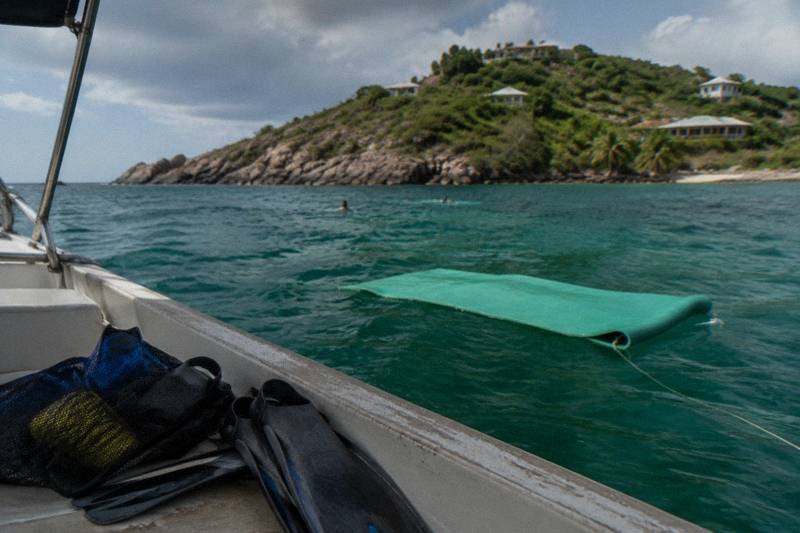
The Paper Boat 8-hour charter is the one product here with a review pool large enough to quote, rated 5.0 across 17 reviews. The operator's listing includes unlimited beer, wine and soft drinks, snorkelling equipment and a giant floating mat, with fuel surcharge covered and lunch and gratuities excluded.
For a fuller walk through the per-person option, the guide to the St Barts boat tour price ranges breaks down every group-size split.
Why Nobody Can Promise You A Calm Crossing
The reserve authority bans any guarantee of sea conditions, no operator may promise a sighting or a sea state, and the official rules that do exist concern speed and equipment: 5 knots maximum inside reserve waters, jet skis and seabobs banned, and ecological mooring buoys advised for vessels up to 20 tonnes and 25 m.
When a listing on this route says nothing about wave heights, that is not an omission, conditions on this crossing change with the weather. Conditions on the channel change by the hour. What is written down and verified is the regulatory layer, from the Agence de l'Environnement's reserve regulation page: the 5-knot limit inside the reserve including its bays and shoreline bands, the ban on jet skis, seabobs, electric surfboards and any thermal or electric propulsion device, and the ban on touching protected species such as turtles or coral. That speed limit is one reason the final approach into Gustavia, Colombier and Fourchue is slow and gentle regardless of what the channel threw at you an hour earlier.
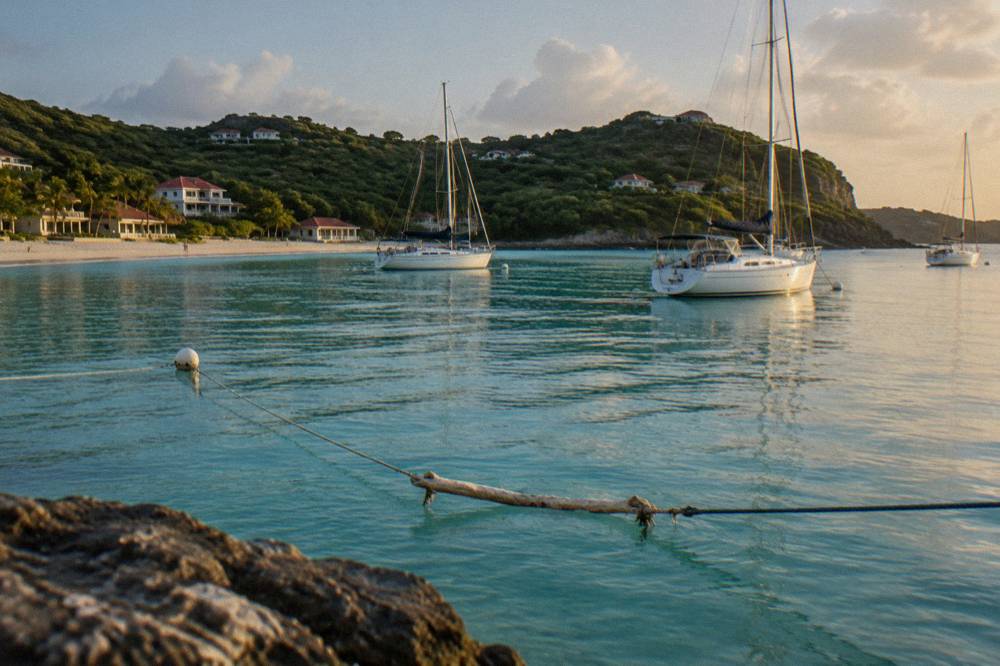
It also explains an absence travellers notice when they search. There is no jet ski tour around St Barts, and not because nobody thought of one: the reserve bans the machines outright, along with every similar propulsion device. The waters around the island are a managed natural reserve with five protection zones, including the bays of Colombier and Fourchue, and the activities that survive inside it are the slow ones, snorkelling, swimming and sailing. The background on that is in what the St Barts marine reserve covers.
For the crossing itself, the practical takeaway is that the rough part, when there is a rough part, is the open channel, and it ends at the reserve boundary. Boats slow to 5 knots, enter the sheltered bays, and the character of the day changes. Guests on the Colombier and Ile Fourchue itinerary spend the middle of their day in exactly those protected waters, where the listing includes lunch, drinks, snorkelling gear, paddle boards and floating mats.
Which Months Make For The Gentlest Crossing?
Meteo-France's 1991 to 2020 normals show the driest, most settled stretch from January to April, with February the driest month at 38.4 mm of rain, and the wettest from September to November, with October at 135.6 mm. Hurricane season runs 1 June to 30 November with a peak from mid-August to mid-October, so the group boat day's 12 May to 31 August 2027 window overlaps its start.
Temperature tells a calmer story than rainfall: average highs run from 28.5 C in January to 31.7 C in September, and lows never drop below 23.3 C, so warmth is never the question on this route. Water and wind are.
| Month | Average high | Average low | Rainfall mm | Season note |
|---|---|---|---|---|
| January | 28.5 C | 23.5 C | 52.6 | Music Festival 8 to 18 Jan 2027 |
| February | 28.6 C | 23.3 C | 38.4 | Driest month of the year |
| March | 29.0 C | 23.5 C | 41.4 | Bucket Regatta mid-March 2027 |
| May | 30.7 C | 25.1 C | 61.7 | Group boat day season opens 12 May |
| August | 31.6 C | 26.3 C | 79.6 | Group day season closes 31 Aug 2027 |
| September | 31.7 C | 26.2 C | 96.9 | Hurricane season peak begins |
| October | 31.4 C | 25.8 C | 135.6 | Wettest month; season peak continues |
Read that as a pattern, not a promise. A wet month can produce a flat, gorgeous week, and a dry month can serve up one blowy afternoon. The reason the climate data still matters is that it moves the odds, and it explains the shape of the local calendar: the Bucket Regatta puts superyachts in Gustavia in mid-March 2027, the Music Festival's 43rd edition runs 8 to 18 January 2027, and both sit squarely in the settled half of the year.
The summer-only group day is the interesting case. Its 12 May to 31 August 2027 window means the only per-person crossing on the roster begins just before hurricane season starts and runs two months into it. That is not a reason to avoid it; it is a reason to book it with the free cancellation it lists and check the forecast in the days before, rather than treating a summer date as either safe or doomed.
Boat, Ferry Or Flight: Matching The Crossing To Your Stomach
If rough water is the worry, the levers that actually exist are boat choice, timing flexibility and cancellation terms: a private charter lets you set the schedule, the ferry runs to a timetable you cannot move, and only procedural details are verified for either. St Barth Commuter flies from both Juliana and Grand Case to St Barts, but durations and fares are unconfirmed.
The realistic decision looks like this. Travellers who want the lowest per-person cost and are fine with a fixed schedule and a bigger vessel look at the ferry, or at the $189 group day when it runs. Travellers who want to choose their morning, split the cost across a group and stop where they like take a private charter: the Anse Marcel full-day charter works out, split across its maximum of 10, to a per-guest figure that can sit near the group day price, which is plain arithmetic on the listed $1,947.52, not a discount claim. Travellers who want the crossing to be the trip itself book the overnight Zephyr catamaran from Grand Case, 2 days for up to 4 guests with breakfast, lunch and dinner included, from $4,816.09 per group.
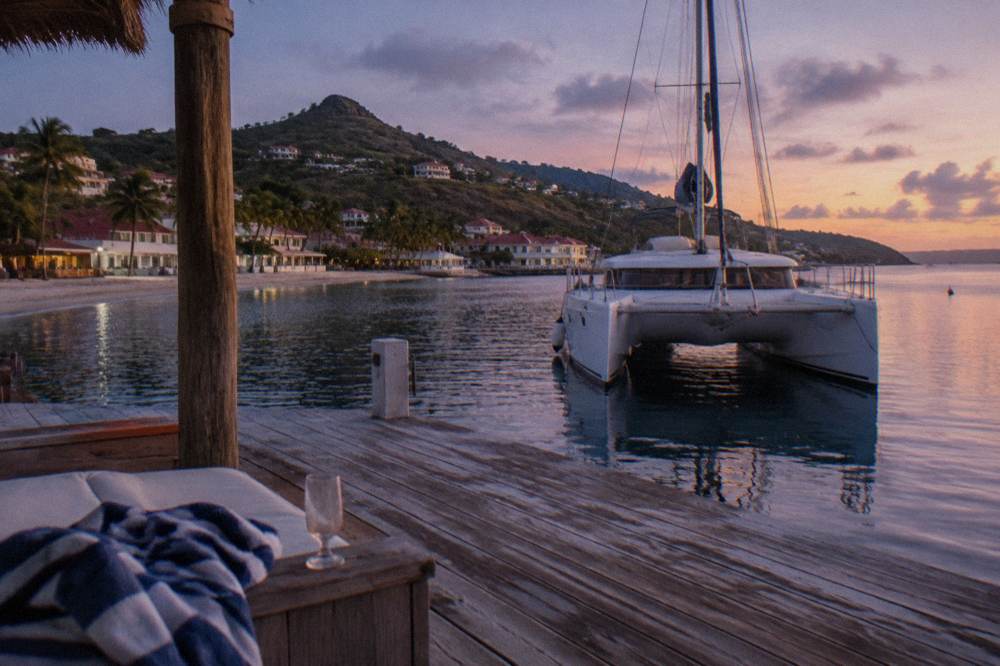
The sailing question gets a fuller treatment in catamaran versus ferry for St Barts, and the timing question, morning against afternoon, in choosing a morning or afternoon departure. The short version for sea state: a private skipper can shift a departure around the day's conditions, a scheduled ferry cannot, and a flight skips the water entirely if you accept that its timetable and fares are only visible in the airline's own booking system.
One caution worth repeating, because the channel tempts people to over-plan it: no source worth trusting publishes a wave-height average for this crossing, and every operator here, correctly, refuses to promise a sea. The most honest planning tool you have is the free-cancellation terms on the day charters plus a weather check the day before. The Nikki Beach charter, for instance, lists round-trip private transfer, an open bar and a guide, from $2,120 per group for up to 15, with free cancellation listed and customs clearance fees excluded; its review pool of 5 at 4.8 is too small to support any rating claim.
If the sea between St Martin and St Barts has a single honest description, it is this: variable by design, manageable by choice of boat and season, and gentle at both ends, where the 5-knot reserve waters slow everything down. Pick the vessel that matches your tolerance, keep the cancellation terms in your favour, and let the crossing be a crossing rather than an ordeal.
Common Questions About The St Martin To St Barts Crossing
How Bad Is The Ferry From St Martin To St Barts?
It varies with season and weather, and no verified crossing time or comfort figure exists on the official ferry pages. What is verified: Great Bay Express leaves Bobby's Marina in Philipsburg, needs a passport from every passenger, and requires arrival 45 minutes before departure with check-in closing 15 minutes before. Hurricane season runs 1 June to 30 November, peaking mid-August to mid-October.
How Rough Is The Sea Between St Martin And St Barts?
The sea state varies and no fixed figure describes it. Meteo-France normals show the driest, most settled months from January to April and the wettest from September to November, with October the wettest at 135.6 mm. The open channel is the exposed leg; once boats enter the marine reserve they slow to 5 knots in sheltered bays.
Can I Take A Boat Instead Of The Ferry?
Yes. Five private charters run from St Martin ports, from $1,947.52 per group for up to 10 on the Anse Marcel full-day charter to $4,816.09 for the overnight catamaran, plus one per-person group day at from $189 that runs 12 May to 31 August 2027 with a US$20 government fee on top.
Does Hurricane Season Affect The Crossing?
Atlantic hurricane season runs 1 June to 30 November with peak activity from mid-August to mid-October, per NOAA. The group boat day's 12 May to 31 August 2027 window overlaps its start. No operator promises conditions; the practical protection is the free cancellation listed on the day charters.
Is There A Jet Ski Or Sunset Cruise Option?
No. The marine reserve bans jet skis, seabobs, electric surfboards and any thermal or electric propulsion device in its waters, and no such product exists on the bookable roster. The reserve also bans touching protected species and wearing gloves in the water.
What Is The Calmest Time Of Year To Cross?
The climate record, not a forecast, favours January to April, with February the driest month at 38.4 mm of rain and highs around 28.5 to 29 C. Events cluster there too, with the Music Festival 8 to 18 January 2027 and the Bucket Regatta in mid-March 2027.