Which Is Better, Turks And Caicos Or St Barts?
A comparison of Turks and Caicos and St Barts built on verified St Barts facts: marine reserve rules, climate normals, ferry and charter logistics, and what a boat day from St Martin actually costs.
Neither island is objectively better, and the honest answer depends on what the trip is for. St Barts suits a short, boat-heavy visit reached by a short hop from St Martin, with a protected marine reserve, French village character and private charters from $1,947.52 per group. Turks and Caicos suits a longer, beach-focused stay built around a direct flight and low-key resort time rather than island hopping. If you find yourself leaning toward the boat-heavy appeal of St Barts, our guide to sunset cruises around St Barts shows how to end a day on the water in style.
The question comes up more often than you would expect, because the two destinations sit in the same mental slot for many travellers: expensive, exclusive, beach-centred, and slightly harder to reach than the mass-market Caribbean. That surface similarity hides a real difference in shape. St Barts is a small, hilly French island where the harbour town of Gustavia anchors everything, and where the sea between St Martin and St Barts is short enough that a day trip by boat is a normal thing to do. Turks and Caicos is a flat archipelago built around Providenciales and its long beaches, reached almost entirely by air, and experienced mostly from a resort base rather than by moving between islands. Since Anguilla sits just across the water from St Martin too, our guide to choosing between Anguilla and St Barts weighs which island better suits a day trip and which rewards a longer stay.
This article compares them using what can actually be verified on the St Barts side. For Turks and Caicos, the comparison stays qualitative, because this site's research only covers St Barts in depth, and inventing figures for a destination we have not verified would be exactly the kind of filler a good comparison should avoid. Where a number appears below, it comes from a verified source: the marine reserve authority, Meteo-France climate normals, or the live listings of the six boat products actually sold on this site. For more background on why this small island commands such loyalty, from its yacht culture to its protected waters, see our guide to why billionaires keep choosing St Barts.
One framing note before the detail. This site publishes on St Barts, so the evidence base is naturally deeper on that side, and the practical detail below is written for someone weighing the two options from a position of being able to reach either. The short version of the verdict: if your mental image of the trip involves a boat, snorkelling in a regulated marine reserve, and a French town to wander in the evening, St Barts wins. If it involves settling into one spectacular beach for a week with minimal movement, Turks and Caicos is built for exactly that.
What Kind Of Island Is Each One?
St Barts is a steep, dry, French-speaking island of ten thousand or so residents centred on Gustavia, with beaches tucked into coves and a marine reserve wrapping most of the coast. Turks and Caicos is a flat, English-speaking archipelago of low limestone and wetland, centred on Providenciales, where the beaches run long and unbroken rather than nesting between headlands. The difference in physical shape drives almost everything else.
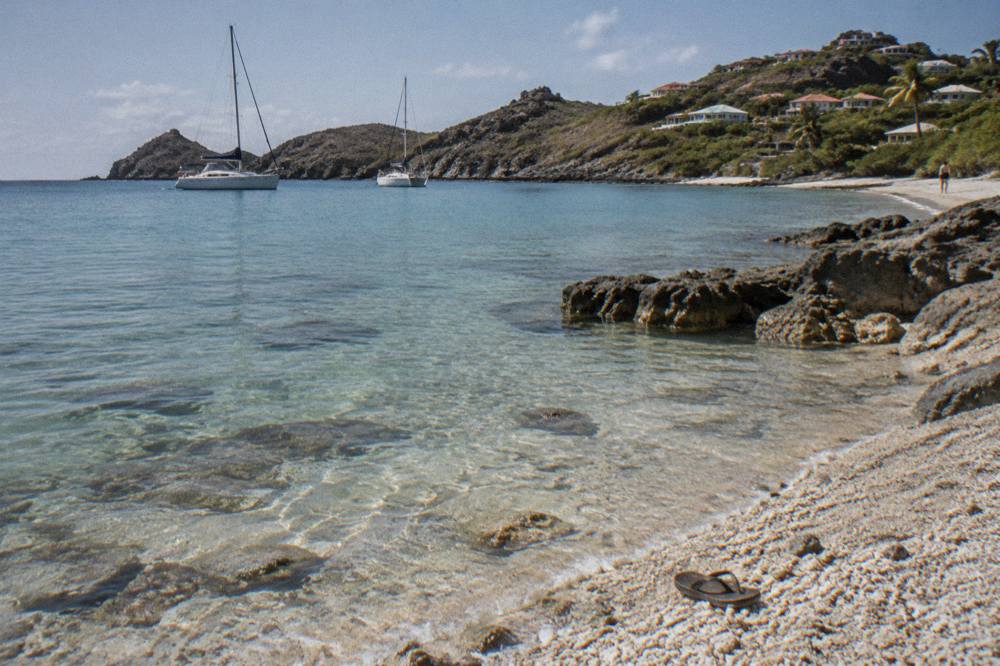
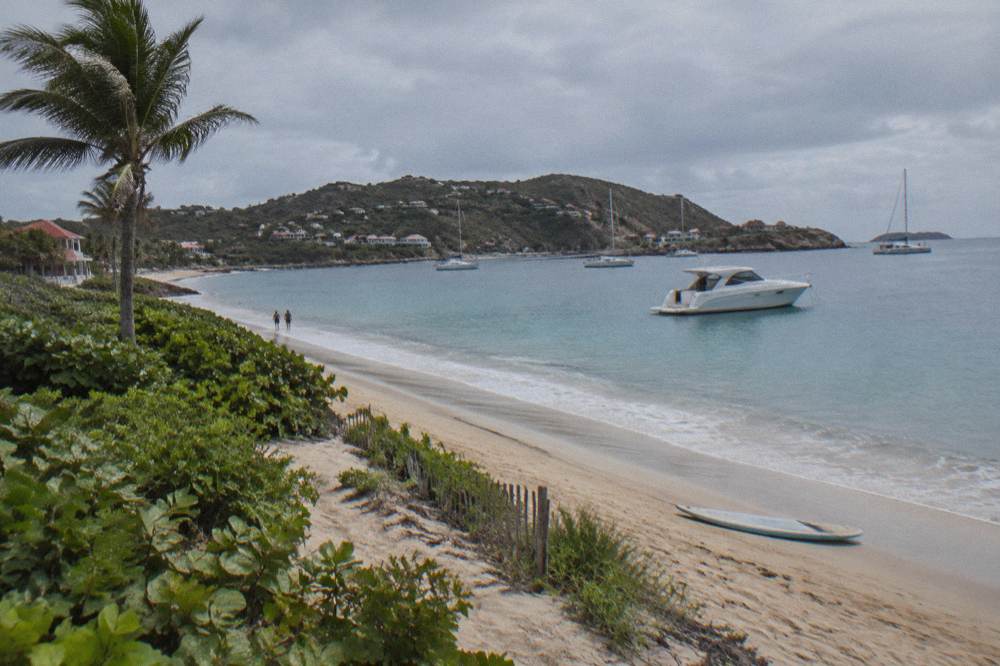
On St Barts, the coastline is the product. Anse de Colombier sits at the end of a walking path on the island's northwest, reachable on foot or by boat, and the marine reserve lists both Colombier and Fourchue bays among its five regulated zones. Beaches here are short arcs of sand in a green, hilly frame. In Turks and Caicos, the famous beaches on Providenciales are the opposite: long, continuous strands backed by low scrub and resort development, with shallow, calm water extending far out. Neither shape is better. They simply reward different plans.
The cultural contrast is just as sharp. Gustavia is a former Swedish free port that still wears its colonial history in its street names and stone warehouses, now filled with boutiques and restaurants that read more French Caribbean than anywhere else in the region. A visit to St Barts involves that town as much as the water. Providenciales is a resort economy laid out along its beaches, and the visitor experience is organised around staying put rather than exploring a capital.
Scale matters too. You can drive around St Barts in an hour or two with stops, and the island's size is part of why so much of the visitor activity happens on the water. Turks and Caicos spread across a much wider area of shoals and cays, but almost all of it is either private, protected, or practical only by boat charter, so the typical stay compresses to one island anyway.
The practical translation is this. A week in Turks and Caicos is a beach holiday with water activities attached. The same week in St Barts is a smaller, more varied loop: a town, a set of coves, a marine reserve, and, if you are starting from St Martin, a genuinely enjoyable crossing by boat each way. If you are already flying into St Martin or Sint Maarten for any reason, the St Barts option becomes a day trip or an overnight rather than a full trip redesign, which is something Turks and Caicos can never be from anywhere. If that crossing sounds appealing, our guide to the actual crossing time covers what to expect on the water.
How Do You Get To St Barts And Turks And Caicos?
St Barts is reached either by a short hop from St Martin, by scheduled ferry, or by chartered boat, and the boat crossing is short enough that five of the six tours sold on this site are day charters from St Martin or Sint Maarten. Turks and Caicos is essentially air-only, centred on Providenciales, and almost always means a longer flight from North America. The journey is the single biggest structural difference between the two.
Start with the St Barts side, because it is unusually well documented. Two ferry operators run between St Martin and St Barts: Great Bay Express departs from Bobby's Marina in Philipsburg on the Dutch side, and requires every passenger to carry a passport, with check-in guidance to arrive 45 minutes before departure and check-in closing 15 minutes before. Voyager sails from the Marigot Ferry Terminal on the French side. Crossing times, fares and sailing days are not published in a static form by either operator, so check their booking systems directly rather than trusting any summary you read elsewhere. The practical point stands regardless: St Barts is a short sea hop from an island with a major international airport.
Flights also connect the pair. St Barth Commuter flies from both SXM (Princess Juliana on the Dutch side) and Grand Case on the French side into St Barts, and the airport, Aeroport de Saint-Barthelemy-Remy de Haenen, sits on Route de Colombier. Beyond that, this site's research could not confirm flight durations, fares or baggage limits on official airline pages, so none are stated here. What is confirmed is the shape: two islands, roughly a ferry or a short flight apart, both served from St Martin.
The charter option is where St Barts becomes distinctive. Because the crossing is short, private boats run it as a product. The Paper Boat Charter motor charter from Anse Marcel carries up to 8 guests for about 8 hours from $2,100 per group, and is rated 5.0 across 17 reviews, the only listing in this roster with enough reviews to quote a rating. The same operator also runs a private sailboat charter from St Martin, 7.5 hours, from $2,000 per group for up to 8, with an open bar and snacks included on the listing; it is a new listing with no reviews yet, so there is no rating claim to make. Both list free cancellation, the sailboat version up to 24 hours before.
Turks and Caicos has no equivalent. There is no neighbouring island a short hop away feeding day-trippers in by ferry, so nearly everyone arrives by air into Providenciales and stays. For a traveller already in the northeastern Caribbean, or cruising through St Martin, that asymmetry decides the question almost by itself. Getting to Turks and Caicos means committing to it as the destination. Getting to St Barts can be as light as a single day.
US visitors should check the official US State Department page before travel; the French West Indies guidance is the relevant reference, and entry rules should never be taken as settled from a secondary summary.
How Do The Beaches And Snorkeling Compare In St Barts?
St Barts offers short cove beaches inside a regulated marine reserve where jet skis are banned and anchoring is controlled, while Turks and Caicos offers long, calm, shallow beaches famous for their width and colour rather than their variety. For snorkelling straight off a protected shoreline, St Barts has the stronger documented framework; for sheer beach scale and swimming ease, Turks and Caicos leads.
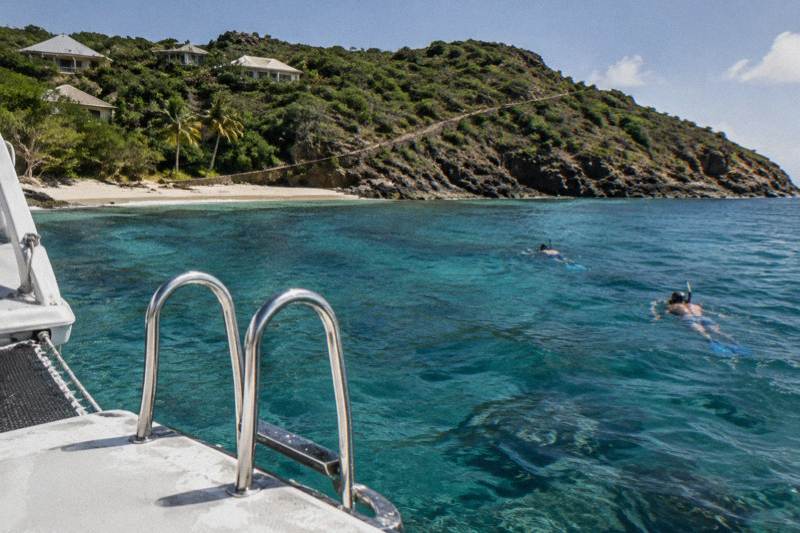
The St Barts marine reserve is the differentiator, and it is worth understanding before comparing sand. The reserve covers five zones, including the bays of Colombier and Fourchue and the islets around them, and its published rules are strict: a 5 knot speed limit on the water, a ban on jet skis, seabobs, electric surfboards and any thermal or electric propulsion device, no taking coral, plants, shells or crustaceans, and no touching protected species such as turtles or coral. Gloves in the water, dogs, dumping and feeding are all banned as well. The rules are published by the reserve authority, and they shape what a beach day feels like: quiet water, no personal watercraft noise, and fish that are used to people. That is also, incidentally, why no jet ski product exists on this island at all, whatever a search result may promise.
| Reserve rule | What it means on the water |
|---|---|
| Speed limit of 5 knots maximum | The final approach into every bay is slow and quiet |
| Jet skis, seabobs, electric surfboards and any thermal or electric propulsion device banned | No personal watercraft noise anywhere in reserve waters |
| No taking coral, plants, shells or crustaceans | Nothing leaves the water with you |
| No touching protected species such as turtles or coral | Look, float, do not touch |
| No gloves in the water, no dogs, no dumping, no feeding | Snorkel bare-handed and leave nothing behind |
| Ecological mooring buoys advised for vessels up to 20 tonnes and 25 m, stays up to 96 consecutive hours | Charter boats tie off rather than anchor in the zones |
Snorkelling in St Barts is largely a boat activity, and the roster reflects it. The group boat day from Simpson Bay, the only per-person product among the six live listings, runs about 7 hours with a maximum of 40 guests from $189 per person plus a US$20 government fee, and includes lunch, drinks, snorkelling equipment, paddle boards and floating noodles on the listing. It runs only from 12 May to 31 August 2027, and it has 8 reviews at 5.0, which is too few a pool for a star claim. It stops at Gustavia, Colombier Beach and Ile Fourchue, which is effectively a tour of the reserve's headline spots. To plan the rest of your days around those same spots, the St Barts highlights guide covers the beaches and seasonal events worth building into the itinerary.
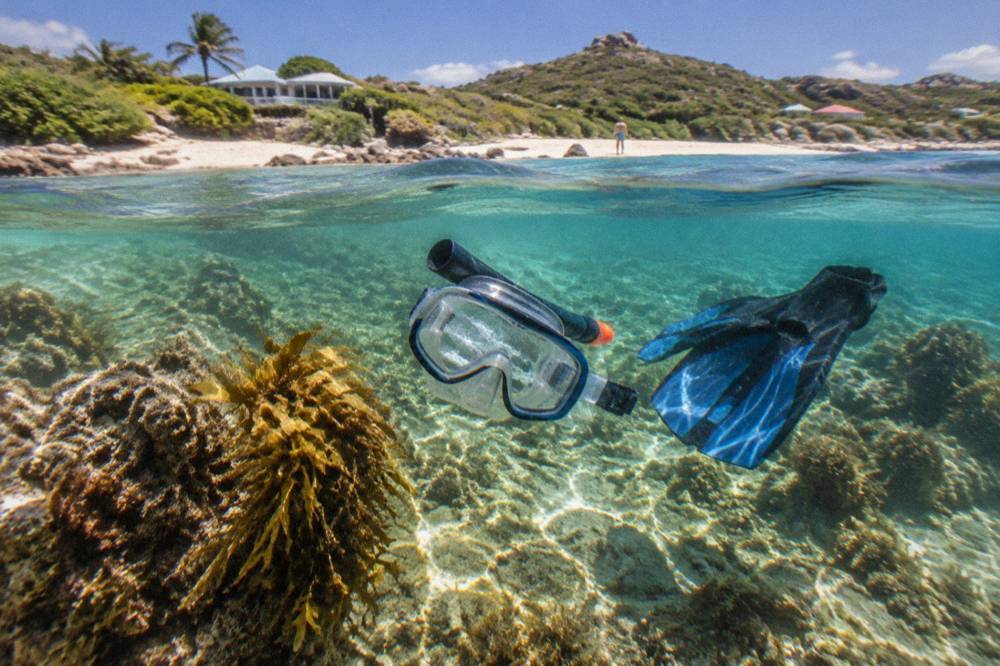
Twenty-three dive sites sit inside the reserve, marked by a red square crossed by a white diagonal, and ecological mooring buoys are advised for vessels up to 20 tonnes and 25 metres with stays of up to 96 consecutive hours. For a snorkeller rather than a diver, the relevant part is simpler: the same protected zones that restrict boats protect the reef life you float above. We compared the listings and none of the six products on this site offers scuba; the snorkelling, paddle boards and swimming are the water menu here.
Turks and Caicos beaches are a different proposition. Providenciales is known for wide, pale sand and very calm, shallow water, which makes it excellent for small children and for long swims, and the beach is the destination rather than the cove-hopping journey. Snorkelling exists, but the celebrated experiences are more about water clarity and flats, plus boat trips to see larger marine life offshore. This site has not verified specifics for Turks and Caicos, so no figures are claimed. The honest qualitative read: Turks and Caicos gives you a better single beach, St Barts gives you a better sequence of them, by boat.
How Do The Costs Compare For St Barts And Turks And Caicos?
On the St Barts side, every published figure here is a boat figure: a $189 per-person group day plus a US$20 fee, and private charters from $1,947.52 to $4,816.09 per group. Turks and Caicos costs are dominated by accommodation and flights, which this site has not verified. The comparison that can honestly be made is what a day on the water costs on each island's own terms.
Here is the full St Barts boat inventory as it actually stands, six listings and no more:
| Listing | Operator | Type | Group max | Price | Reviews |
|---|---|---|---|---|---|
| Gustavia, Colombier Beach and Ile Fourchue tour | Boomerang Boat Charters | Shared group day, 7 hrs | 15 | from $189 per person plus US$20 government fee | 8 reviews at 5.0 |
| Full-day private charter | Love Boat Sxm | Private, about 8 hrs | 10 | from $1,947.52 per group | 3 reviews at 5.0 |
| Private charter from St Martin | Paper Boat Charter | Private, about 8 hrs | 8 | from $2,100 per group | rated 5.0 across 17 reviews |
| Private sailboat charter | Paper Boat Charter | Private sail, 7.5 hrs | 8 | from $2,000 per group | no reviews yet |
| Nikki Beach private charter | Seven Marine Boat Charters | Private, 6 to 8 hrs | 15 | from $2,120 per group | 5 reviews at 4.8 |
| 2 days 1 night by catamaran | Zephyr | Private overnight, 2 days | 4 | from $4,816.09 per group | 3 reviews at 5.0 |
Two fee details are worth printing exactly as the listings state them. The full-day charter excludes dock fees at St Barthelemy of 40 EUR per boat plus 5 EUR per guest, and excludes the slide. The Nikki Beach charter excludes gratuities and customs clearance fees. The overnight catamaran, from $4,816.09 per group for up to 4 guests, includes breakfast, lunch and dinner, excludes lunch in Gustavia, and notes crew tips of 15 to 20 percent as customary, with a full refund up to 6 days in advance.
There is a piece of plain arithmetic that changes how the private numbers read. Split the full-day charter's $1,947.52 across its stated maximum of 10 guests and the per-guest figure lands next to the group day's $189 plus the US$20 fee, and that is before counting that a private boat sets its own stops. The same arithmetic applied to the Nikki Beach charter's $2,120 across its stated maximum of 15 guests comes out lower still. This is labelled arithmetic, not a promise: these are per-group prices, and a smaller party pays the same group rate.
For Turks and Caicos, no verified figures are available from this site's research, and none will be invented. What can be said qualitatively is that Turks and Caicos carries a reputation for high accommodation costs and that its spending concentrates on where you stay, while St Barts concentrates a larger share of a visitor's budget on the water: the boat, the restaurant lunches, the charter day. Travellers consistently describe both as expensive. If your comparison is a budget one, compare your own flight and hotel quotes for the two, and treat the table above as the St Barts water-spend baseline.
Worth knowing alongside the money question is the weather frame, since it affects when each destination is pleasant. St Barts is documented precisely: Meteo-France's 1991 to 2020 normals for the island station show average monthly highs from 28.5 C in January to 31.7 C in September, and monthly rainfall from 38.4 mm in February to 135.6 mm in October, with an annual total of 891.3 mm. The Atlantic hurricane season runs 1 June to 30 November, peaking mid-August to mid-October. Note that the group boat day's 12 May to 31 August 2027 window overlaps the season's start; that is a scheduling fact, not a forecast. The dry, settled stretch on St Barts is January to April. Turks and Caicos shares the same hurricane-season calendar, as the whole basin does, but this site has not verified its month-by-month rainfall.
Which Suits A Luxury Trip, St Barts Or Turks And Caicos?
Both trade on exclusivity, but the flavour differs: Turks and Caicos luxury is a resort-and-villa experience on a long beach, while St Barts luxury is small-scale, French, and partly lived on the water, with charter products from $2,120 to $4,816.09 per group. St Barts also concentrates events, from the Bucket regatta to the January music festival, into a very small stage.
On the St Barts side, the luxury inventory is concrete. The Nikki Beach private charter from Cole Bay, Sint Maarten, runs 6 to 8 hours for up to 15 guests from $2,120 per group, including a round-trip private transfer, an open bar, beers, sodas, snacks and bottled water, with a professional guide. At the top of the range, the Zephyr overnight catamaran takes up to 4 guests for two days and a night from $4,816.09 per group with breakfast, lunch and dinner included. Five of the six listings on this site are private charters, which tells you what kind of visitor this island's boat market serves.
The event calendar adds to the luxury draw on St Barts, and the confirmed parts are specific: the St Barth Bucket Regatta returns in mid-March 2027, and the Music Festival's 43rd edition runs 8 to 18 January 2027. The festival's own site is the reference for tickets. A Gourmet Festival edition is announced for 9 to 15 November 2026. These events fill a very small island quickly, which is part of their appeal and part of the reason shoulder-season travel rewards planning.
Turks and Caicos luxury, in qualitative terms, is built around some of the most expensive resort and villa inventory in the region, private beachfront, and a slower rhythm. It attracts a clientele that wants anonymity and space rather than a scene. St Barts tends toward the opposite: visibility, restaurants, boats in the harbour, a place where the luxury is partly performative and sociable. Neither is a criticism. If your ideal luxury day ends with a quiet dinner at your own villa, that is one island. If it ends with a drink in Gustavia after a day on the water, that is the other.
For a couple or a small group weighing the two, a useful test is what you want from the phrase "a day on the water." In Turks and Caicos, that phrase usually means an excursion booked from your resort. In St Barts, it can mean the entire reason for the trip, whether that is the $189 group day or a private charter with your own itinerary, and if you are starting from St Martin, as many visitors are, the crossing itself is part of the day rather than dead time getting there.
Choose St Barts if you are starting from St Martin or want a short, boat-centred trip with a protected marine reserve, French town life and the option of a $189 group day or a private charter; choose Turks and Caicos for a longer, flight-based stay on one long beach with resort comfort. The honest tiebreaker is your starting point and your appetite for moving around.
By now the pattern should be clear. These two destinations only look like substitutes from a distance. Up close, St Barts is an active, compact, water-driven destination where the marine reserve sets the rules and the boats follow them, and where the crossing from St Martin is a genuine part of the experience rather than a transfer. Turks and Caicos is a settled, spacious beach destination that rewards staying still. If you are the kind of traveller who reads an itinerary and wonders what you will do on day four, that question answers itself differently on each island.
For the St Barts option specifically, the practical entry points are few and clear, because only six products exist and this site lists all of them. The group boat day from $189 per person is the value pick for solo travellers and pairs, with the caveat that it runs only 12 May to 31 August 2027 and adds the US$20 government fee. A full group of up to 10 can take the full-day private charter from $1,947.52 and let the per-guest arithmetic work. The luxury end is the Nikki Beach charter and the overnight catamaran, and the overnight is the only product here that turns the trip into two days, at $4,816.09 per group for up to 4 guests.
One caution worth repeating as a closing note: search results for both islands are full of products that either do not exist or cannot legally operate. There are no jet ski, fishing, kayak, scuba or sunset-cruise listings for St Barts on this site's roster, and the marine reserve bans jet skis outright. Whatever a comparison article promises, the bookable St Barts inventory is the one above, and for Turks and Caicos you should verify any figure against the operator or resort directly. More on the practical side, including what to pack and how prices break down, is in our guides on St Barthelemy Tours covering boat tour prices and comparisons and the full day trip from St Martin, plus our longer piece on how many days you need in St Barts.
Which Should You Actually Book For Your Trip?
Which Is Better, Turks And Caicos Or St Barts?
Neither is objectively better. St Barts suits a short, active, boat-centred trip reached by a short hop from St Martin, with a protected marine reserve, French town life and charters from $1,947.52 per group or a $189 per-person group day. Turks and Caicos suits a longer, flight-based stay built around one long beach and resort comfort.
Is St Barts Easier To Reach Than Turks And Caicos?
From the northeastern Caribbean, yes. St Barts is a short hop from St Martin by ferry, flight or private charter, and five of the six boat tours sold here are day charters from St Martin or Sint Maarten. Turks and Caicos is essentially reached by air into Providenciales, almost always on a longer flight from North America.
Which Has Better Beaches, St Barts Or Turks And Caicos?
Turks and Caicos is known for long, wide, very calm beaches, which suits swimming and families. St Barts has short cove beaches, several reachable mainly by boat, inside a regulated marine reserve. If you want one spectacular beach, Turks and Caicos; if you want a sequence of coves by boat, St Barts.
Can You Jet Ski In St Barts Or Turks And Caicos?
Not in St Barts: the marine reserve bans jet skis, seabobs, electric surfboards and any thermal or electric propulsion device in its waters, and no jet ski product exists on this site's roster. Rules for Turks and Caicos are not verified by this site's research, so check local operators there directly.
Is St Barts Or Turks And Caicos More Expensive?
Both carry a reputation for high cost. On St Barts the verified water spend runs from $189 per person plus a US$20 fee for the group boat day to $4,816.09 per group for a private overnight catamaran. This site has not verified Turks and Caicos prices, so compare flights and accommodation quotes for your own dates before deciding.
When Is The Best Time To Visit St Barts?
Meteo-France normals show the driest stretch from January to April, with February rainfall at 38.4 mm against October's 135.6 mm. Hurricane season runs 1 June to 30 November, peaking mid-August to mid-October, and the group boat day's 12 May to 31 August 2027 window overlaps its start. The Bucket regatta is mid-March 2027 and the Music Festival runs 8 to 18 January 2027.