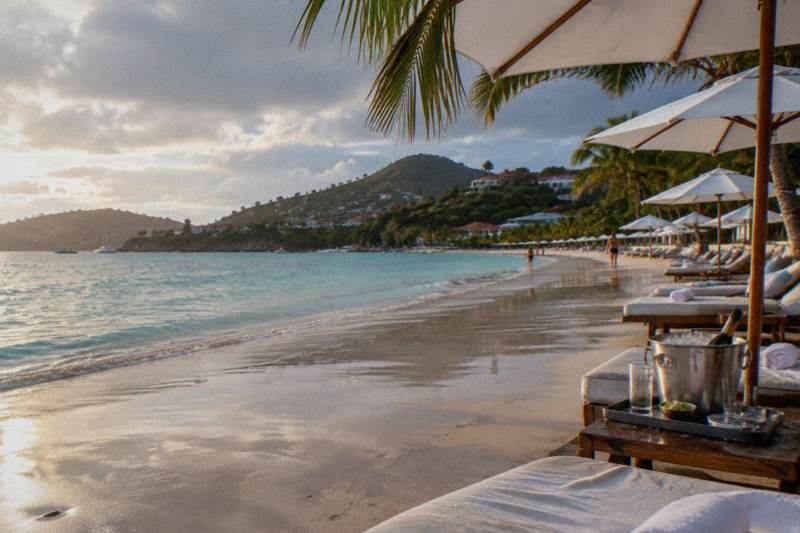
Why Do Billionaires Go To St Barts?
Why the ultra-wealthy keep returning to St Barts: yacht culture, a strict marine reserve, a small airport and what ordinary visitors can actually book on the water.
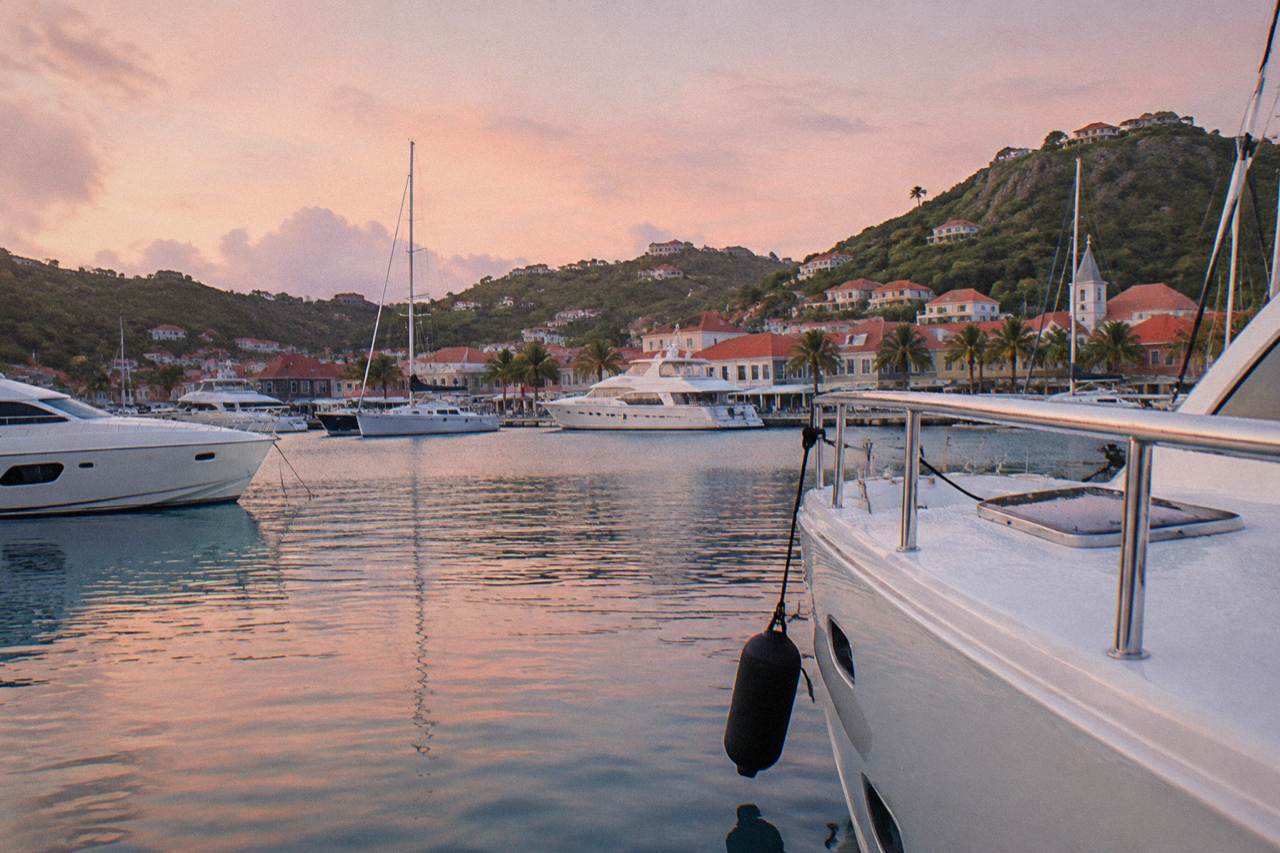
Billionaires go to St Barts because the island combines a protected marine reserve with strict anchoring rules, a harbor and social scene built around yachts, a famously small airport approach that filters arrival volumes, and a deliberately low-rise building code that keeps the place quiet. None of that is a tax or privacy claim; it is what the island's own rules and geography produce, and much of it is bookable by ordinary visitors. One of the easiest ways for ordinary visitors to see that protected harbor and anchorage from the water is an evening sail, and our guide to sunset cruises around St Barts covers the routes, boats, and what a trip actually costs.
The question gets asked constantly, and most answers online lean on celebrity sightings and invented wealth statistics. This site publishes tours, not gossip, so the answer here sticks to what can be verified: the reserve authority's published rules, the island's climate record, its event calendar, and the six boat products actually bookable through St Barthelemy Tours. The honest version of the story is more interesting than the myth anyway, because almost everything that draws the superyacht crowd, from Colombier Bay to the Gustavia quay, is accessible on a charter that costs less than a hotel night in high season.
The first thing to understand is scale. St Barts is a small, hilly French overseas territory with a modest resident population, and its visitor economy runs on a limited number of high-value guests rather than mass arrivals. The harbor at Gustavia is the center of that economy. When the St Barth Bucket Regatta arrives in mid-March 2027, the quay fills with sailing superyachts, and the town reorganizes itself around them. The rest of the year the anchorage still defines the island: boats in front, boutiques and restaurants behind, hills above.
The second thing is protection. The waters around the island sit inside the Réserve Naturelle de Saint-Barthélemy, a five-zone marine park that caps speed at 5 knots and bans jet skis, seabobs, electric surfboards and any thermal or electric propulsion device outright. That single fact explains a lot about who feels comfortable here. There is no jet ski noise, no towed-water-sport traffic in the bays, and no crowding of the anchorages, because the rules forbid it. An island that bans the loudest toys on the water naturally appeals to people who came to escape noise.
The third thing is simply what a visitor can do about it. You do not need a superyacht to spend a day on the same water. The group boat day from Simpson Bay runs from $189 per person, and private charters from St Martin start at $1,947.52 per group for up to 10 guests. The rest of this article walks through the mechanics of the island's appeal and then the practical question: what part of it can you book.
Yacht Culture And The Marina At Gustavia
Gustavia is the operational heart of the answer. The harbor holds the island's principal anchorage, the town wraps around it, and the annual calendar is built around sailing events, with the St Barth Bucket Regatta confirmed for mid-March 2027. Yachts are not an accessory to St Barts; they are the reason much of the visitor infrastructure exists at all.
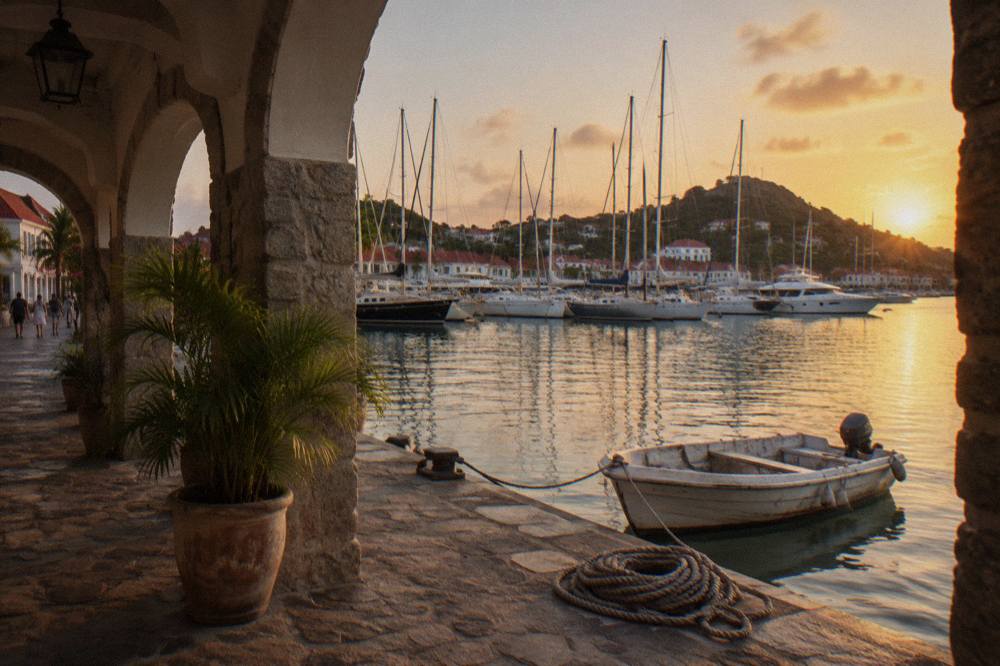
The harbor's role is visible in the rules the reserve authority publishes for it. Within the reserve's waters, including port areas and a 300 m shoreline band, the speed limit is 5 knots. In Colombier and Fourchue bays, vessels over 25 m are not authorized at all, and anchoring is permitted only outside the ecological buoy zones. Forty ecological mooring buoys serve those two bays for vessels up to 20 tonnes and 25 m, with stays capped at 96 consecutive hours before the vessel must leave the reserve for a minimum of 96 hours. These are rules written for and around a yacht fleet, and they keep the prettiest anchorages on the island calm.
The event calendar reinforces the pattern. The St Barth Bucket Regatta, confirmed on the organizers' own site for mid-March 2027 as a four-race series, is one of the few regattas in the world sailed primarily by superyachts. The St Barth Music Festival holds its 43rd edition from 8 to 18 January 2027, and the St Barth Gourmet Festival is announced for 9 to 15 November 2026. A visitor basing a trip on these dates is sharing the island with the crowd the question is about, which is worth knowing in both directions: harbor-front demand peaks, and so does the atmosphere.
What surprises many first-time visitors is how close ordinary boat traffic gets to all this. Charter boats from St Martin cross to the same bays the yachts anchor in, because the reserve's simple protection zones at Colombier and Fourchue are open to everyone on the same terms. The Boomerang group day from the Dinghy Dock Bar in Simpson Bay lists Colombier Beach and Ile Fourchue among its stops, alongside Gustavia itself. The scenery is not gated; only the noise is.
For travelers who want the yacht-adjacent version of the day, the Nikki Beach private charter from Sint Maarten is the listing built for it. Seven Marine Boat Charters runs it from Cole Bay for up to 15 guests, 6 to 8 hours, from $2,120 per group, with a round-trip private transfer, an open bar, beers, sodas, snacks and bottled water included, and gratuities and customs clearance fees excluded. It holds a 4.8 rating from 5 reviews, a pool too small for a star claim, but the format is exactly the one the question implies: arrive like the boats in the harbor do.
What Privacy Actually Looks Like On St Barts
Privacy on St Barts is a function of geometry and rules, not secrecy. There are no high-rise hotels, the beaches are numerous and small, the interior is steep and residential, and the marine reserve keeps powered water sports out of its bays. The result is an island where a famous guest can be anonymous in a way that is impossible on larger, louder Caribbean islands.
No fresh research file for this site confirms tax residency, banking or asset-protection claims about St Barts, so this article makes none of them. Anyone promising you a tax explanation for the island's wealth appeal is guessing. What can be verified is physical. The build profile is low. The airport, Aeroport de Saint-Barthelemy-Remy de Haenen on the Route de Colombier, is a small strip whose very approach limits aircraft size, though runway limits and operating rules are not confirmed on an official page and are not stated here. The point stands regardless: arrival capacity on St Barts is structurally small, and small arrival capacity is the oldest luxury product there is.
The marine reserve does quiet work here too. Beyond the jet ski ban, reserve rules prohibit noise pollution on the water and underwater hull lighting, restrict drones below 300 m height without authorization, and ban dogs on the reserve's beaches. The bays that visiting boats flock to, Colombier and Fourchue, sit in simple protection zones where collecting coral, plants, shells or crustaceans is forbidden and fishing requires a permit. The reserve authority lays out these zones on its published regulatory zones page.
For a regular visitor, the practical version of privacy is a boat of your own for the day, even a small one. The Paper Boat Charter from Marina Anse-Marcel takes up to 8 guests for about 8 hours from $2,100 per group, with fuel surcharge, unlimited beer, wine and soft drinks, snorkelling gear and a giant floating mat on the listing. Rated 5.0 across 17 reviews, it is the one product on this site with enough reviews for a rating claim. The same operator runs a separate 7.5-hour private sailboat charter to St Barts from $2,000 per group, a new listing with no reviews yet; the two are different products and stay different, one a motor charter, one a sailboat.
Why The Marine Reserve Keeps St Barts Exclusive
The Réserve Naturelle de Saint-Barthélemy is the single biggest structural reason the island's waters feel different from neighboring islands. Its five zones ban powered water toys outright, cap speed at 5 knots, restrict anchoring to defined bays and buoys, and close 23 marked dive sites to most activity. Exclusive here is enforced by regulation, not by price.
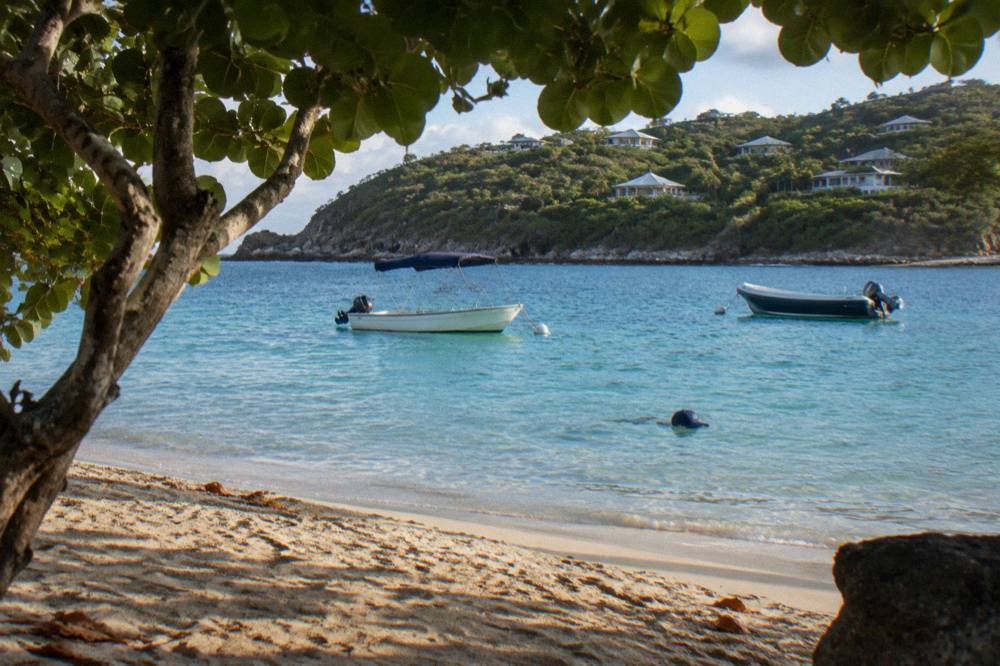
The details matter because they are what a visitor actually experiences. Twenty-three dive sites sit inside the reserve, each marked by a red square crossed by a white diagonal, and each operating under strict limits: ecological buoys only, boats up to 10 tonnes and 15 m, one boat per buoy, maximum stays of 2 hours 30 minutes, no sailboats, no gloves, no fishing gear aboard. Reinforced protection zones add a total ban on fishing, anchoring and scuba diving. The Grand Cul-de-Sac lagoon carries its own layer, including a 50 m strip where kitesurfing is forbidden and a channel limited to 3 knots.
For the wealthy visitor, this regulatory wall is the product. A bay where jet skis cannot legally operate, where boats over 25 m cannot anchor, and where the loudest thing on the water is likely to be wind is a scarce good in the Caribbean. It cannot be bought elsewhere and replicated here. When people ask why the superyacht set returns annually, the reserve is the most concrete answer the record supports: the anchorage experience they are buying is partly a legal construct, maintained by an agency with enforcement powers.
The ordinary visitor buys the same construct for a day. The group boat day from Simpson Bay, from $189 per person plus a US$20 per person government fee, includes snorkelling equipment, paddle boards, life jackets, floating noodles and a lily pad, with lunch and alcoholic beverages listed as included. It runs only from 12 May to 31 August 2027, with free cancellation listed. That window overlaps the start of the Atlantic hurricane season, which runs 1 June to 30 November with a peak from mid-August to mid-October, per the US National Hurricane Center's climatology definition. No weather outcome is promised here; the overlap is simply a scheduling fact.
Ecological rules also shape what charter crews can offer, which is why no listing on this site promises a turtle sighting. Reserve rules ban touching protected species such as turtles or coral, ban gloves in the water, and ban feeding animals. Operators describe marine life as possible, never guaranteed. That honesty is itself part of the island's character.
Can You Charter A St Barts Boat Without A Superyacht Budget
Yes, and the arithmetic is better than most people expect. Five of the six bookable products on this site are private charters priced per group between $1,947.52 and $4,816.09, and split across their stated group maximums the per-guest figure can sit near the $189 per-person group day price, plain arithmetic, not a per-person rate. The barrier is the group size, not a membership.
The per-group prices divide by headcount in a way that surprises people who assume St Barts water is members-only. The full-day St Barth private charter from Love Boat Sxm costs from $1,947.52 per group for up to 10 guests. The Paper Boat motor charter is from $2,100 per group for up to 8, the sailboat version from $2,000 per group for up to 8, and the Nikki Beach charter from $2,120 per group for up to 15, the largest group maximum on the roster. These are per-group prices, and the operator charges the group, never a per-person rate. Still, the point holds: the private-boat day on St Barts water is a group-dinner expense, not a yacht-purchase expense.
The full-day Anse Marcel charter is the workhorse option. It departs Marina de l'Anse Marcel on the French side of Saint Martin, runs about 8 hours, and lists stops at St Jean Beach and Gustavia, with soda, snorkelling equipment, fuel, a paddle board and a floating mat included. Dock fees at St Barthelemy, 40 EUR per boat plus 5 EUR per guest, and the slide are excluded, and free cancellation is listed. Three reviews at 5.0 is too small a pool for a star claim, so none is made.
At the other end of the format range, the overnight catamaran from Zephyr turns the day trip into two. The 2 days 1 night private catamaran from St Martin to St Barth takes up to 4 guests from the Quai 58 pontoon in Grand Case at from $4,816.09 per group, with breakfast, lunch and dinner included and lunch in Gustavia plus crew tips of 15 to 20 percent excluded. The listing offers a full refund up to 6 days in advance. This is the product that most closely mirrors what the yacht crowd actually does with the island: arrive by water, stay overnight, leave the next day.
The chart below compares the six products on the facts that matter for a decision.
| Charter | Operator | Group max | Duration | Price | Rating |
|---|---|---|---|---|---|
| Group boat day | Boomerang | 15 | about 7 hours | from $189 per person plus $20 fee | 5.0 from 8 reviews |
| Full-day private charter | Love Boat Sxm | 10 | about 8 hours | from $1,947.52 per group | 5.0 from 3 reviews |
| Private charter from St Martin | Paper Boat | 8 | about 8 hours | from $2,100 per group | 5.0 from 17 reviews |
| Nikki Beach private charter | Seven Marine | 15 | 6 to 8 hours | from $2,120 per group | 4.8 from 5 reviews |
| Overnight catamaran | Zephyr | 4 | 2 days | from $4,816.09 per group | 5.0 from 3 reviews |
| Private sailboat charter | Paper Boat | 8 | 7.5 hours | from $2,000 per group | no reviews yet |
What A Luxury Day On The Water Costs From St Martin
A luxury day on the water from St Martin to St Barts starts at $2,000 per group for an 8-guest private sailboat charter, or $2,120 per group for a 15-guest charter with an open bar. The overnight version runs from $4,816.09 per group for up to 4 guests with meals included, and extras are few and clearly stated.
The Nikki Beach charter earns its luxury category honestly. Beyond the open bar and private transfer, its 6-to-8-hour format and 15-guest ceiling make it the natural choice for a celebration group, which is exactly the use case the billionaires' island invites regular visitors to imitate. It is also this article's featured product, and it can be compared directly on its live listing, where free cancellation is listed. If the question is what the wealthy version of a St Barts day feels like from the water, this is the closest bookable analogue on this site.
Budget transparency matters here because the island's reputation for expense is partly an artifact of what gets counted. A day trip from St Martin can be done at group-tour prices, and the question of whether St Barts is really expensive has a more nuanced answer than the myth suggests. What the ultra-wealthy pay for is not access, since the bays are public and the reserve rules apply to everyone; they pay for privacy, scale and timing, and smaller groups can buy modest versions of all three.
Timing has a measurable component. The Meteo-France station at St Barthelemy, using 1991 to 2020 normals, records average monthly highs from 28.5 C in January to 31.7 C in September, and monthly rainfall from 38.4 mm in February to 135.6 mm in October, with an annual total of 891.3 mm, per the published climate normals. February is the driest, quietest month on the rain gauge, which lines up neatly with peak season crowds on land. The sailing crowd, by contrast, clusters around the Bucket in mid-March 2027.
A quick planning comparison for the three luxury-format products:
| Format | Best for | Included highlights | Watch-outs |
|---|---|---|---|
| Nikki Beach private charter | Celebration groups up to 15 | Open bar, private transfer, guide, snacks | Customs fees and gratuities excluded |
| Overnight catamaran | Couples or families of up to 4 | Breakfast, lunch, dinner aboard | Gustavia lunch and 15 to 20 percent crew tips excluded; refund window 6 days |
| Full-day Anse Marcel charter | Groups up to 10 wanting beaches | St Jean and Gustavia stops, paddle board, floating mat | Dock fees 40 EUR per boat plus 5 EUR per guest excluded |
When The Yacht Crowd Comes To St Barts: Events And Seasons
The wealth calendar on St Barts has three confirmed anchors: the Music Festival from 8 to 18 January 2027, the Bucket Regatta in mid-March 2027, and the Gourmet Festival from 9 to 15 November 2026. Outside those windows, the high season runs through the dry January-to-April stretch, while hurricane season spans 1 June to 30 November without predicting any particular week's weather.
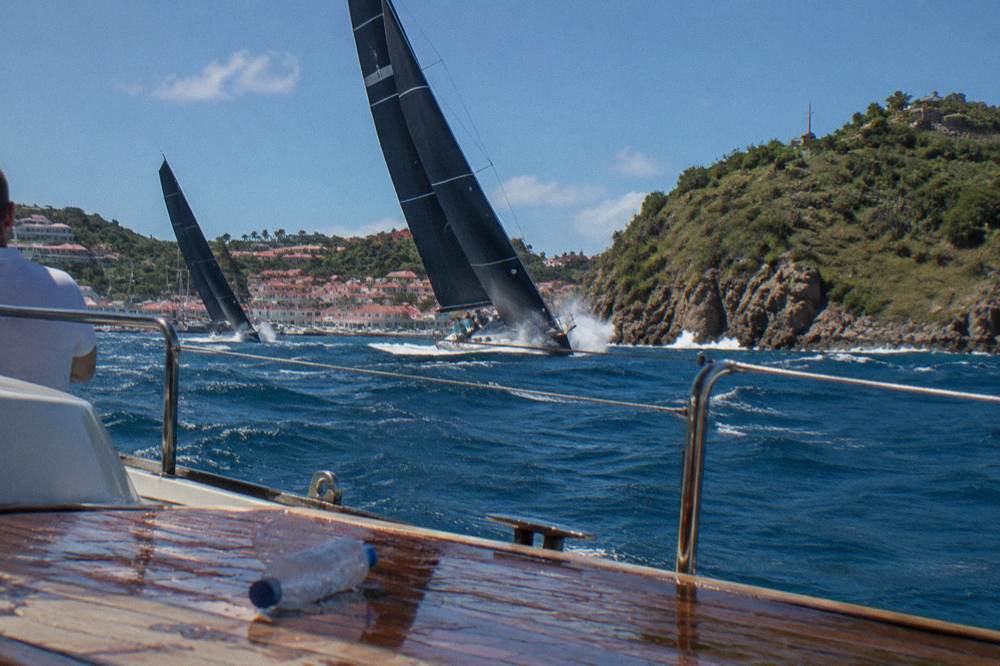
The Bucket deserves its reputation. It is a four-race series sailed by some of the largest private sailing yachts in existence, and the organizers' own page currently shows two start-date variants for March 2027, which is why this site writes mid-March rather than a precise day. When the fleet is in, Gustavia's quay becomes a floating architecture exhibition, and even visitors with no boat connection find the harbor worth a walk. Other event dates, including Les Voiles de Saint-Barth and the New Year fireworks, are not confirmed on official pages and are deliberately not stated here.
For trip planning, the interaction between events and weather is the real variable. The dry months of January through April, with rainfall between roughly 38 and 52 mm per month in the long-term record, coincide with both the Music Festival and the Bucket. October, the wettest month at 135.6 mm on average, sits inside both hurricane-season peak and the low season. None of this forecasts any individual week; it is a 30-year average, so read it as a weighting, not a promise.
The group boat day's calendar matters here for one reason: it is the only per-person product on the roster, and it runs exclusively from 12 May to 31 August 2027. That window begins before hurricane season opens on 1 June and ends before the September peak of the season. Travelers who want the cheap seat on St Barts water therefore have a defined season of their own, one that overlaps summer rather than the yachting winter.
What remains constant across all seasons is the island's carrying logic: arrive small, stay quiet, leave the water as regulated as you found it. That is the whole formula, and it is why the answer to the question is less about the people who come than about the island they come to. A visitor on a $189 group day and a guest on a 40 m sloop are buying the same 5-knot bay, the same banned jet ski silence, and the same walkable Gustavia; only the cabin differs. More on planning that side of a trip sits in the one day in St Barts itinerary.
Common Questions About St Barts
Why Do Billionaires Go To St Barts?
For the combination of a strictly protected marine reserve that bans jet skis and caps speed at 5 knots, a harbor culture built around yachts, small arrival volumes, and a low-rise island that preserves privacy. Verified sources support none of the tax or privacy explanations commonly repeated online, so this site does not print them.
Can You Visit St Barts On A Normal Budget?
Yes. A group boat day from Sint Maarten runs from $189 per person plus a US$20 government fee, though only from 12 May to 31 August 2027. Free things on the island, including public beaches, are covered in the site's free guide.
How Much Is A Private Charter To St Barts?
Private charters on this site run from $2,000 per group for an 8-guest sailboat charter to $4,816.09 per group for a 4-guest overnight catamaran. Split across a full group, the same boats work out to a per-guest figure that can sit near the group day price, by plain arithmetic.
Is St Barts Only For The Ultra-Wealthy In High Season?
No. The confirmed event calendar, the Music Festival in January 2027, the Bucket in mid-March 2027 and the Gourmet Festival in November 2026, draws a wealthy crowd, but the bays, reserve rules and harbor are public and bookable at group-tour prices in season.
Can You See The Superyachts At Gustavia?
Yes, the harbor at Gustavia is a public waterfront and the anchorage is visible from shore, especially around the St Barth Bucket Regatta in mid-March 2027. Charter stops at Gustavia, including on the full-day Anse Marcel charter, put you alongside it.
Are Jet Skis Available In St Barts?
No. The marine reserve bans jet skis, seabobs, electric surfboards and any thermal or electric propulsion device in its waters, which is why no such product exists on any listing on this site.