Can You Snorkel In St Barts
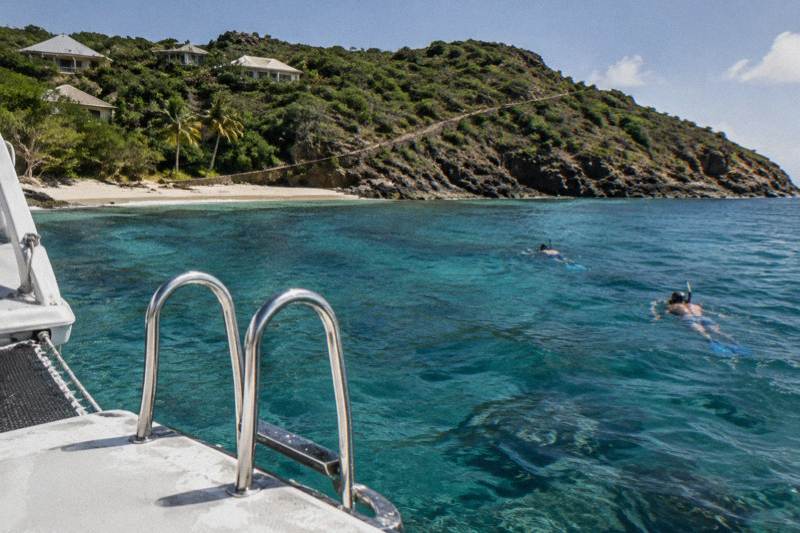
Yes, you can snorkel in St Barts: three of the island's six live boat listings include gear, the marine reserve protects clear bays like Colombier, and beginners can go with guides. Here is what the listings and reserve rules actually say.
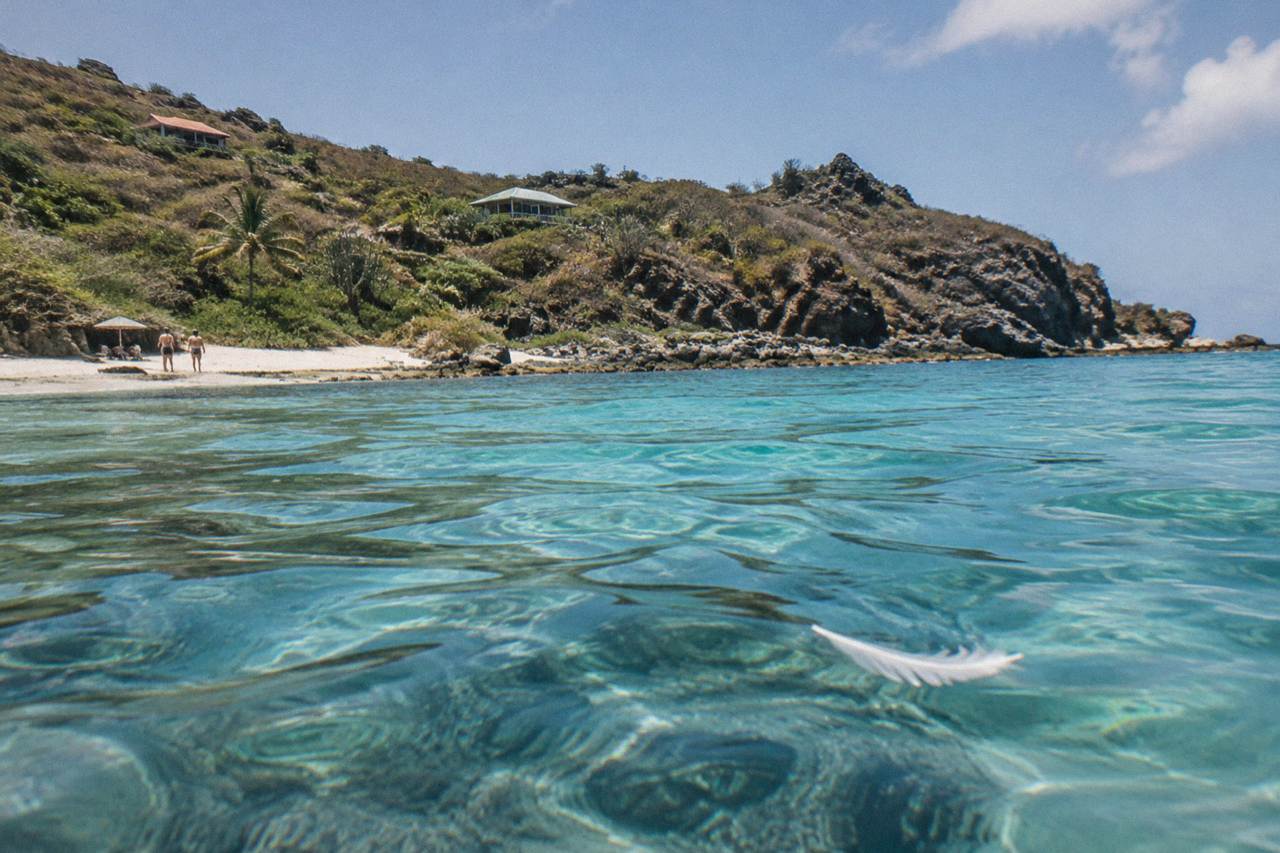
Yes. Snorkelling is one of the main reasons boats cross to St Barts, and three of the six products currently bookable include snorkelling equipment in the ticket: the Boomerang group day from Simpson Bay at from $189 per person, the Love Boat full-day private charter from $1,947.52 per group, and the Paper Boat private charter from $2,100 per group. Whether a first-time snorkeller is comfortable is decided by the guides and the sea that day, not by the listing.
The short version is that the water is warm, the bays are sheltered, and the gear is already on the boat. What trips people up is not the snorkelling itself but the assumptions around it: that you can rent a jet ski for the afternoon, that you can pocket a shell as a souvenir, or that any tour any month of the year will run. None of those hold on this island.
The Réserve Naturelle de Saint-Barthélemy wraps most of the good water in rules, and those rules shape what a beginner's day actually looks like. Speeds inside the reserve are capped at 5 knots, jet skis and any thermal or electric propulsion device are banned outright, and taking coral, plants, shells or crustaceans out of the water is prohibited. That last rule is the one new snorkellers most often bump into without realising.
It also explains the inventory. A search for jet ski, fishing, kayak or dive products around St Barts on the major booking platforms comes back empty, and the reserve's ban on propelled leisure devices is the reason. What the platforms do sell is six boat products: five private charters priced per group between $1,947.52 and $4,816.09, and one group boat day priced per person. Snorkelling is the common thread through half of them.
For a first snorkel, the practical questions are which boat to take, what the water will ask of you, and what the reserve lets you do once you are in it. This article works through each, using only what the listings and the reserve authority actually publish.
Which Boats Take You Snorkelling In St Barts
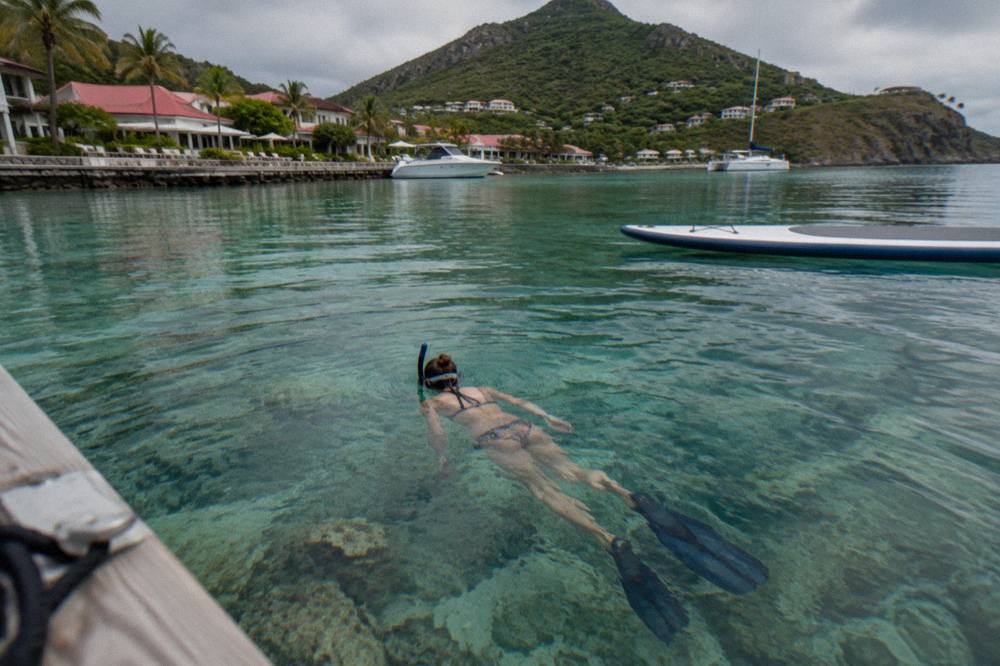
Three of the six bookable products list snorkelling equipment as included. The Boomerang group day from Simpson Bay includes gear alongside lunch, drinks, paddle boards and floating noodles, from $189 per person plus a US$20 government fee. The Love Boat and Paper Boat private charters include gear with their group prices of from $1,947.52 and from $2,100 respectively. The other three listings do not mention snorkelling equipment.
Start with the only per-person option, because it is the one most beginners will compare first. The St. Barths: Gustavia, Colombier Beach, and Ile Fourchue Tour run by Boomerang Boat Charters is a shared group day trip capped at 40 guests, meeting at the Dinghy Dock Bar in Simpson Bay, Sint Maarten, and running about 7 hours. The listing includes lunch, alcoholic beverages, snorkelling equipment, paddle boards, life jackets in adult and child sizes, floating noodles and a lily pad. It has 8 reviews at 5.0, a pool too small for a star claim. It runs 12 May to 31 August 2027 only, and lists free cancellation.
A family or a group of friends weighing per-person against per-group maths should do the division openly. Split the Love Boat full-day private charter's from $1,947.52 across its maximum of 10 guests and the per-guest figure can sit near the group day price, though it is plain arithmetic, not a discount. That charter departs Marina de l'Anse Marcel on the French side of Saint Martin, runs about 8 hours with stops at St Jean Beach and Gustavia, and includes soda, snorkelling equipment, fuel, a paddle board and a floating mat. Dock fees at St Barthelemy, 40 EUR per boat plus 5 EUR per guest, are excluded, as is the slide.
The Paper Boat Charter's 8-hour motor charter from Marina Anse-Marcel takes up to 8 guests at from $2,100 per group and includes unlimited beer, wine and soft drinks, a professional guide, snorkelling equipment and a giant floating mat; lunch and gratuities are excluded. It is the one listing on the roster with enough reviews to quote, rated 5.0 across 17 reviews. Paper Boat also runs a separate 7.5-hour private sailboat charter at from $2,000 per group for up to 8, a new listing with no reviews yet whose listing mentions an open bar and snacks but no snorkelling equipment, so treat the two as different products.
Here is how the six listings line up on the question that matters for this article:
| Listing | Type and price | Snorkel gear | Other inclusions stated |
|---|---|---|---|
| Boomerang group day | Shared group, max 40, from $189 per person plus US$20 government fee | Included | Lunch, alcoholic beverages, paddle boards, life jackets, noodles, lily pad |
| Love Boat full-day charter | Private, up to 10, from $1,947.52 per group | Included | Soda, fuel, paddle board, floating mat; dock fees and slide excluded |
| Paper Boat 8-hour charter | Private, up to 8, from $2,100 per group | Included | Unlimited beer, wine and soft drinks, guide, giant floating mat; lunch excluded |
| Paper Boat sailboat charter | Private sailboat, up to 8, from $2,000 per group | Not stated | Open bar, snacks |
| Nikki Beach charter | Private, max 15, from $2,120 per group | Not stated | Transfers, guide, open bar, snacks; customs fees excluded |
| Zephyr overnight catamaran | Private overnight, up to 4, from $4,816.09 per group | Not stated | Breakfast, lunch, dinner; Gustavia lunch and crew tips excluded |
"Not stated" is exactly that: the listing does not mention it. It is not the same as a no, and a quick message to the operator settles it either way. If snorkelling is the point of the day, the three listings that name the gear remove the doubt in advance.
The Boomerang day is the natural first pick for a beginner travelling alone or as a couple, and it is the tour this site features for snorkelling questions. Read more in the guide to St Barts snorkelling tours, or check the related tour's own page for the day's shape. Check availability
Is Snorkelling In St Barts Beginner-Friendly
The listings do not rate themselves for beginners, so the honest answer is that guides and operators decide on the day, and you should ask before booking. What the roster does show supports a nervous first-timer: life jackets in adult and child sizes on the group day, floating noodles and a lily pad to hold onto, and calm bays inside the marine reserve where boat speeds are capped at 5 knots.
Beginner-friendliness is not a fact on any of the six listings, and inventing it would be dishonest. What can be said is mechanical. The Boomerang day puts flotation in the water beside you: noodles, a lily pad, paddle boards, and life jackets sized for children as well as adults. That is the equipment profile of a boat that expects swimmers of mixed confidence. The Love Boat and Paper Boat charters both include floating mats, which serve the same purpose for a group that includes one reluctant snorkeller.
The sea does its part only sometimes, and no honest article will promise otherwise. Sea state, visibility and wind vary day to day, and none of the listings, the reserve authority or this site can guarantee conditions. The reserve's geography helps: Colombier and Fourchue are bays, and bays are where boats go when the outside water is uncomfortable. The 5-knot speed limit inside reserve waters, including within 100 m of islets and a 300 m shoreline band, means no wake and no wash rolling over a swimmer at the surface.
A first-timer's realistic worries, and what the facts say about each:
- Fitness: snorkelling at the surface is floating more than swimming, and fins do the moving. The group day's flotation gear means you can stop and hold something whenever you want.
- Gear: masks, snorkels and fins are included on three listings, so nothing needs to be bought or packed. The other listings do not state it; ask the operator.
- Deep water: nothing about snorkelling requires depth. Shallow reef edges in the bays are where the fish are, and the boat stays nearby.
- Sea life: the reserve authority bans touching protected species such as turtles and coral, and bans feeding animals. Watching is the whole activity, and the rules keep it that way.
- Group pressure: a private charter, at from $1,947.52 per group, lets one nervous person set the pace for the whole boat. The group day, at from $189 per person, does not, but its flotation gear softens that.
One pattern in guest reviews on the live listings recurs: people describe the crew as patient with first-time snorkellers. That is a review sentiment, not an operator promise, and it matches what the equipment lists imply. On the question of timing, the morning or afternoon boat tour comparison is worth a read, since surface conditions often favour one end of the day, though no listing guarantees either.
Beginners also ask about turtles. Turtles are a protected marine species in the reserve, the rules ban touching them, and sightings are never promised by anyone honest. The fuller picture is in can you see sea turtles snorkeling in st barts.
Where Can Beginners Snorkel Around St Barts
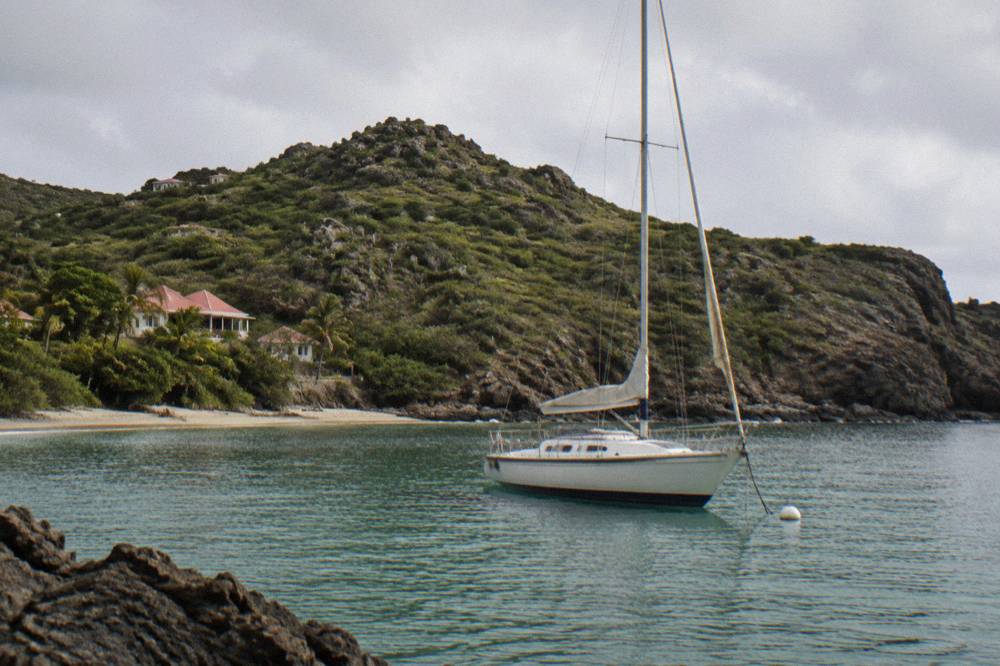
The two names that appear on the listings themselves are Colombier Beach and Ile Fourchue, both inside the marine reserve's simple protection zones along with the Gros Ilets, Pain de Sucre, Toc Vers and Frégate islets. The Boomerang day names both stops in its title; the reserve authority's published zoning confirms both bays are protected. Where a private charter stops beyond that is the operator's call on the day.
Colombier is the island's famous walk-in-or-sail-in beach, and the boat is the easier way in. The Boomerang group day sails from Simpson Bay across to St Barts and structures the day around Gustavia, Colombier Beach and Ile Fourchue, which is as close to a named beginner snorkel itinerary as the roster gets. The Love Boat full-day charter names St Jean Beach and Gustavia as its stops, and its included snorkelling equipment implies water time, but the listing does not name snorkel stops specifically.
The reserve's own zoning, as published by the French environment agency, lists five zones including the bays of Colombier and Fourchue and the islets around them. Those are simple protection zones: collecting coral, plants, shellfish or crustaceans is prohibited, as are dumping garbage, feeding animals and dogs on beaches. In the water the same bans apply, plus gloves and touching protected species. Fishing requires a permit. None of that stops a snorkeller; all of it shapes what a snorkeller may carry and touch.
Around Grand Cul-de-Sac the rules tighten further in places: anchoring is prohibited in parts, kitesurfing is forbidden within a 50 m strip, and the channel is limited to 3 knots. For a beginner this matters mainly as reassurance: the most crowded, splashy water sports are exactly what the reserve restricts.
A note on what does not exist, because beginners ask: there are no jet ski, kayak, scuba or sunset-cruise products on the platforms for St Barts, and jet skis, seabobs and electric surfboards are banned in reserve waters outright. Twenty-three dive sites sit inside the reserve, marked by a red square crossed by a white diagonal, but no dive product is bookable on this site's roster. The snorkel-from-a-boat day is the water activity on offer.
For choosing a bay and a month together, the rainfall record is the most useful verified data:
| Period | Rainfall pattern (Meteo-France 1991-2020 normals) | What it means for a snorkel day |
|---|---|---|
| January to April | Lightest months, 38.4 mm in February rising to 50.9 mm in April | The drier stretch of the year; the group day does not run in this window |
| May to June | 61.7 mm and 56.0 mm | The group day's season opens 12 May 2027 |
| July to August | 80.4 mm and 79.6 mm | Wetterside but the group day runs to 31 August 2027 |
| September to November | 96.9 mm to 135.6 mm, October the wettest | Outside the group day's window; private charters list no season cap |
What Rules Apply To Snorkelling In St Barts
The reserve authority's published rules are short and strict: no taking coral, plants, shells or crustaceans, no gloves in the water, no dogs, no dumping, no feeding animals, and no touching a protected marine species such as a turtle or coral. Boat speeds are capped at 5 knots in reserve waters. Anchoring is authorised only inside Colombier and Fourchue bays outside the buoy zones, and vessels over 25 m are not authorised there. These protections are a big part of the island's appeal, and our guide to what makes St Barts so special shows how the reserve fits with Gustavia harbor and the beaches you can only reach by boat.
Every one of those rules comes from the reserve authority's own regulatory-zones page, and a beginner can hold all of them in one sentence: look, float, touch nothing. The rules exist because the reserve works; the same bays that make first-time snorkelling comfortable are the ones the zoning protects, and the protection is part of why. Details of the zoning and its five protected zones are published by the French Agency for Biodiversity if you want the primary text, and there is a plain-language summary in what is the marine reserve in st barts.
The buoy system deserves a line of explanation because you will see it. Forty ecological mooring buoys sit in Colombier and Fourchue, advised for vessels up to 20 tonnes and 25 m, with stays limited to 96 consecutive hours, after which the vessel must leave the reserve for at least 96 hours before returning. Your charter captain handles all of this; as a snorkeller you only need to know why the boat ties up rather than anchors, and that the buoy field is deliberate.
Two rules catch visitors by surprise more than the rest. Shells count: taking crustaceans and shells out of the water is prohibited, so the souvenir stays on the seabed. And gloves are banned in the water, which removes the temptation to steady yourself on coral with a covered hand. Reef-safe sunscreen rules are not published in the reserve's zoning pages, so no claim either way is made here.
| Reserve rule | What it means on the boat |
|---|---|
| 5 knot speed limit in reserve waters | No wake where you swim; boats move slowly inside bays and near islets |
| No touching turtles or coral | Watch only; distance is the whole etiquette |
| No taking shells, coral, plants or crustaceans | Nothing leaves the water, including empty shells |
| No gloves in the water | Bare hands, nothing to brace against |
| No feeding animals | Fish stay wild and uncrowded |
| Anchoring only in Colombier and Fourchue outside buoy zones | Captains use the 40 ecological buoys; max 20 tonnes, 25 m, 96 hours |
None of this is burdensome for a beginner, and most of it is invisible. The captain manages the boat side of the rules; the snorkeller manages only the six behaviours in the table. The Hurricane season note matters for planning: the season runs 1 June to 30 November with a peak mid-August to mid-October, and the group day's 12 May to 31 August 2027 window overlaps its start. That is a statement about calendars, not a forecast, and free cancellation is listed on the group day and most charters if plans change.
What Should A Beginner Bring For A St Barts Snorkel Day
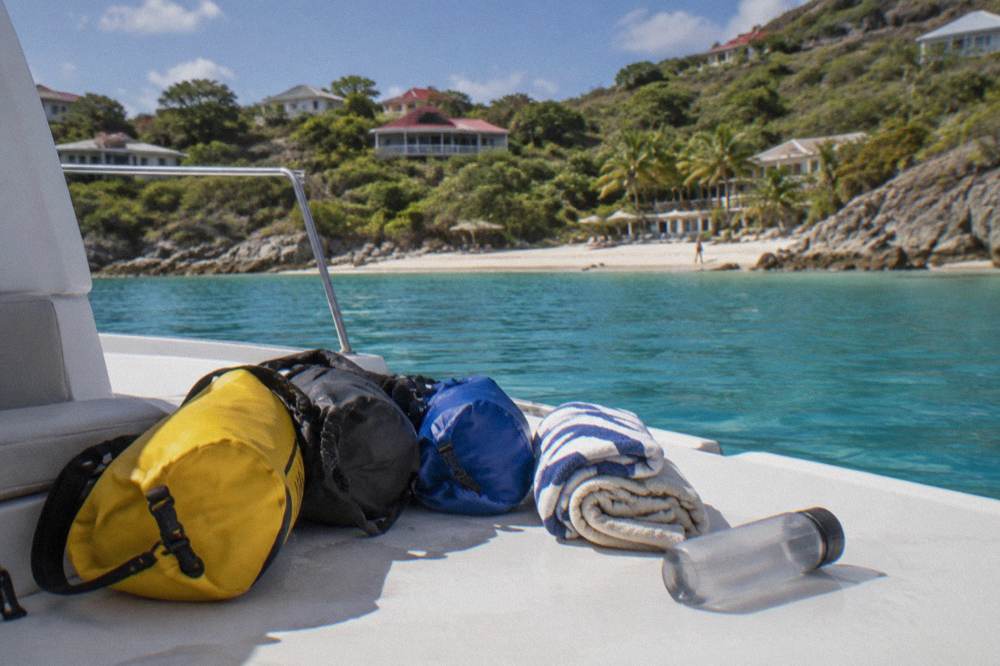
Bring a towel, sun protection, something dry for the ride back, and a passport for every traveller, since every boat crosses between Sint Maarten or Saint Martin and St Barts. The three snorkel-inclusive listings supply masks, fins and flotation, so the only gear a beginner needs to buy is none. Gratuities are excluded on every listing, and the group day adds a US$20 per person government fee paid separately.
The towel line is not a joke: the Boomerang listing excludes towels specifically, alongside gratuities and private transportation. Lunch and drinks are included on that listing, so the packing list is short. The full packing logic, including what changes between the group day and a private charter, is laid out in what to bring on a St Barts boat tour.
The passport point is the one that ruins trips. Every product on the roster departs from Sint Maarten or Saint Martin and lands in St Barts, a different customs territory, and every passenger needs valid travel documents; the ferry operators state the same rule for their passengers, with Great Bay Express requiring a passport for everyone aboard. US citizens should check the official US State Department French West Indies page before travelling rather than relying on second-hand summaries.
Money questions, briefly and only from the listings: the group day is from $189 per person plus the US$20 government fee. The Love Boat charter is from $1,947.52 per group for up to 10, with dock fees of 40 EUR per boat plus 5 EUR per guest excluded. The Nikki Beach charter at from $2,120 per group excludes customs clearance fees. Crew tips run 15 to 20 percent customary on the overnight catamaran, and gratuities are excluded on the group day and the Nikki Beach charter alike. No other fees are confirmed, and none should be assumed.
A beginner's decision, then, compresses to three honest sentences. Snorkelling in St Barts is real, bookable and gear-inclusive on three listings. The reserve makes the water quiet and the rules simple, and the crew decides the rest on the day. And as the site behind this article, St Barthelemy Tours keeps the roster to the six live products rather than padding it with tours that no longer run.
To choose between the two shapes of day, the group boat day and the private charter, the comparison in St Barts private boat charters sets out the per-group arithmetic against the per-person one.
Common Questions About Snorkelling In St Barts
Can You Snorkel In St Barts
Yes. Three of the six live listings include snorkelling equipment: the Boomerang group day from Simpson Bay at from $189 per person plus a US$20 government fee, and the Love Boat and Paper Boat private charters at from $1,947.52 and from $2,100 per group. The marine reserve's protected bays, including Colombier and Fourchue, are the usual water.
Do I Need My Own Snorkel Gear?
No, on the three listings that include it. Masks, snorkels and fins are listed inclusions on the Boomerang group day and on the Love Boat and Paper Boat charters. The other three listings do not mention gear, so confirm with the operator before assuming.
Can A Non-Swimmer Snorkel In St Barts?
Snorkelling is mostly floating, and the group day carries life jackets in adult and child sizes plus floating noodles and a lily pad, but no listing promises suitability for non-swimmers. Tell the operator your swimming level when booking and let the crew decide. Nothing published here is a substitute for that conversation.
Is Snorkelling Allowed Everywhere Around The Island?
The reserve covers five zones including the bays of Colombier and Fourchue and several islets, with simple protection rules: no taking coral, shells or crustaceans, no gloves, no feeding animals, and no touching protected species. Around Grand Cul-de-Sac additional local rules apply. Outside those zones the general bans still apply in reserve waters.
When Does The Group Snorkel Boat Run?
The Boomerang group day operates 12 May to 31 August 2027 per its listing, from $189 per person plus a US$20 government fee. It does not run outside that window. The private charters list no seasonal cap.
Are Jet Skis Or Scuba Diving Available In St Barts?
No jet ski product exists on the booking platforms, and the marine reserve bans jet skis, seabobs, electric surfboards and any thermal or electric propulsion device in its waters. Twenty-three dive sites sit inside the reserve, but no dive product is bookable on this site's roster.