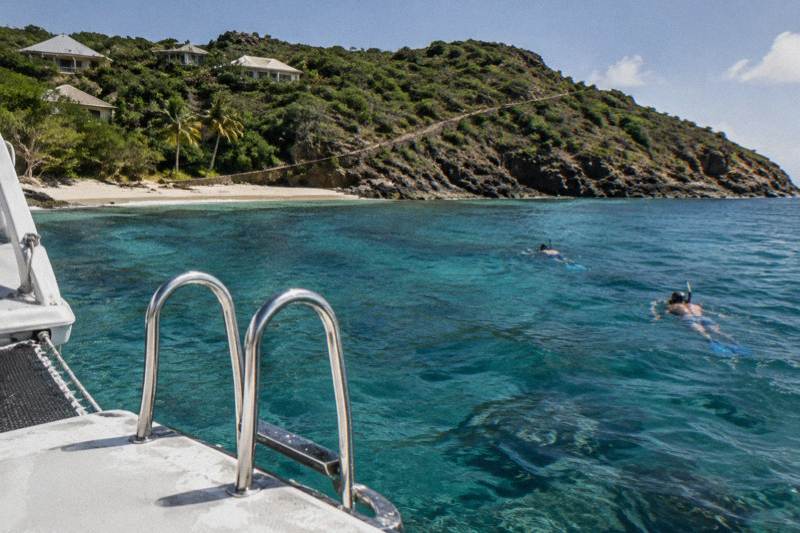
Snorkeling St Barts Turtles
Can you see sea turtles while snorkeling in St Barts? What the marine reserve rules say, where the boat tours stop, and what no listing will ever promise.
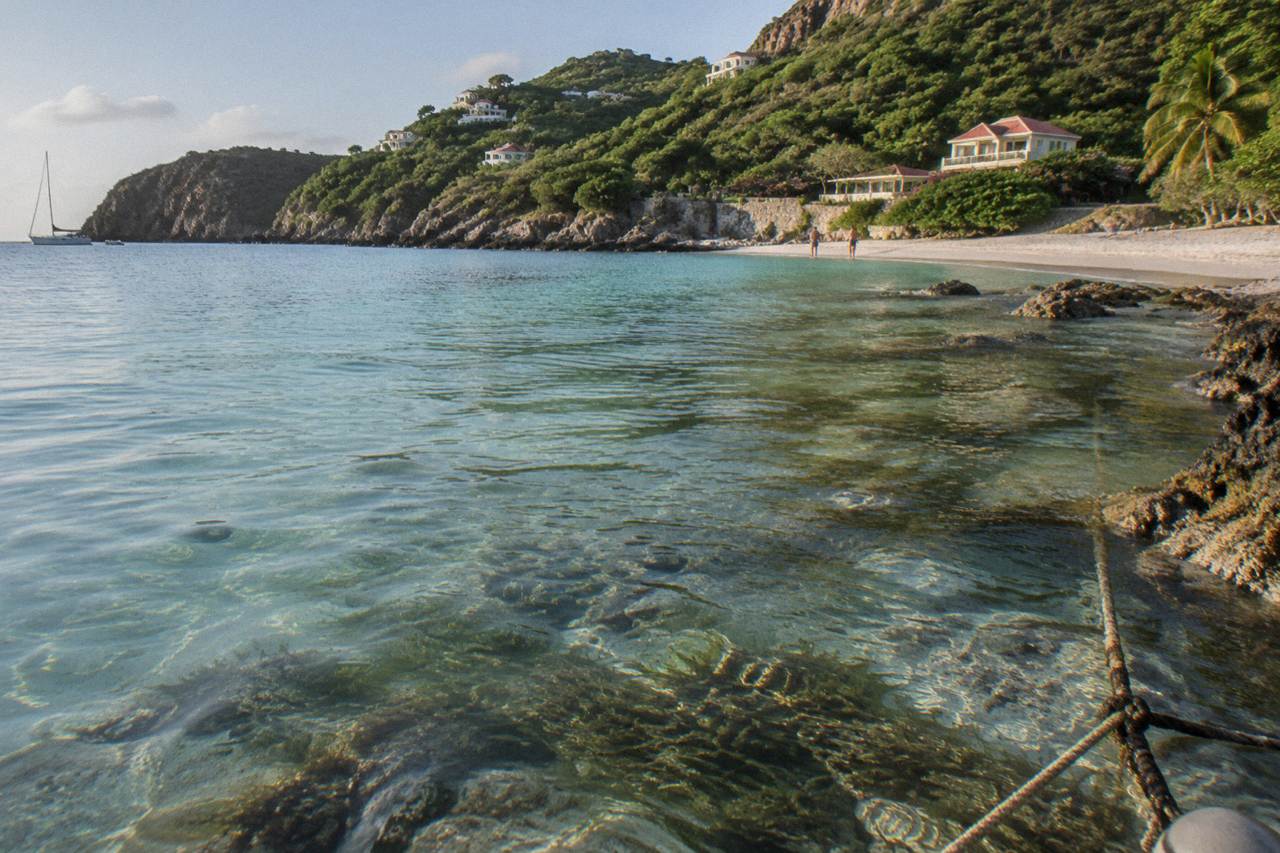
Yes, sea turtles are a real possibility while snorkeling in St Barts, and no honest operator will promise you one. The island's waters sit inside the Réserve Naturelle de Saint-Barthélemy, where turtles are a protected species and the rules that shelter them, from a 5 knot speed limit to a outright ban on touching them, are part of why they are around at all. What a tour can promise is the water, the gear and the stop. To see which outfits run those stops responsibly, our guide to St Barts snorkeling tours lays out what each operator actually provides.
That distinction between possible and promised is the whole story of this page, and it is worth getting straight before you book anything. St Barts is a small island with a marine reserve wrapped around much of its coastline, covering five zones including the bays of Colombier and Fourchue, two of the anchorages that St Martin day boats most often visit. Calm, protected bays with sea grass and reef are the habitat turtles use, and those are exactly the bays the boat tours stop at. So the geography works in your favour. But sea life moves on its own schedule, weather changes, and the listings themselves make no claims about turtles. A responsible way to think about it: book the day on the water for the water, and treat a turtle as the best possible bonus. The same marine reserve that shapes those turtle odds is one of several things that set the island apart, and our guide to what makes St Barts special walks through the harbor, the beaches reached by boat or a hiking trail, and the rest of the picture.
We compared the six live listings bookable through this site, and none of them promises a turtle, a fish, or any particular creature. What they do state, plainly, is where they go, what gear they hand out, and what is included. The St. Barths: Gustavia, Colombier Beach, and Ile Fourchue Tour run by Boomerang Boat Charters is the only per-person product on the roster, a shared group day with a maximum of 40 guests that meets at the Dinghy Dock Bar in Simpson Bay, Sint Maarten, runs about seven hours, and costs from $189 per person plus a government fee of US$20 paid separately. Its listing includes lunch, alcoholic beverages, snorkelling equipment, paddle boards, life jackets in adult and child sizes, floating noodles and a lily pad. Free cancellation is listed. It operates 12 May to 31 August 2027 only, which matters for your planning and we come back to it below.
If turtles are the headline for your trip, that group day and the private charters are your two formats. Here is the shortlist.
Where The Snorkel Stops Around St Barts Actually Sit
The boat trips that leave from St Martin and St Maarten concentrate on Colombier Beach and Ile Fourchue, two named areas of the marine reserve on St Barts' northwestern side, plus Gustavia and St Jean Beach on the full-day routes. Every one of these stops sits inside or beside reserve waters, which is why the snorkelling there is treated as a privileged activity rather than a free-for-all.
Colombier is the stop that comes up most often in connection with turtles, and for a structural reason rather than a marketing one. The bay is part of the reserve, it is reachable on land only by a hiking trail, and its waters are sheltered, which is the kind of quiet cove sea turtles feed and rest in. The reserve authority's own published material describes the zone as a simple protection zone where collecting coral, plants, shellfish or crustaceans is prohibited, along with dumping garbage, feeding animals and bringing dogs onto the beaches. The rules paint a picture of a place managed for the animals first. That is the honest basis for calling Colombier a good turtle bay: not a guarantee, but a habitat that is deliberately protected.
Ile Fourchue, the second regular stop, is likewise inside the reserve and covered by the same zone rules. Vessels over 25 m are not authorised in Colombier and Fourchue bays, anchoring is only allowed outside the buoy zones, and ecological mooring buoys are advised for vessels up to 20 tonnes and 25 m, with stays capped at 96 consecutive hours. In practice this means the boats arriving from St Martin are small to mid-sized craft picking up a buoy or anchoring carefully, in bays where the reserve has installed 40 ecological moorings across Colombier and Fourchue. The reserve has also marked 23 dive sites inside its waters, identified by a red square crossed by a white diagonal. A snorkeller floating at the surface is seeing the same protected ecosystem a diver sees from below.
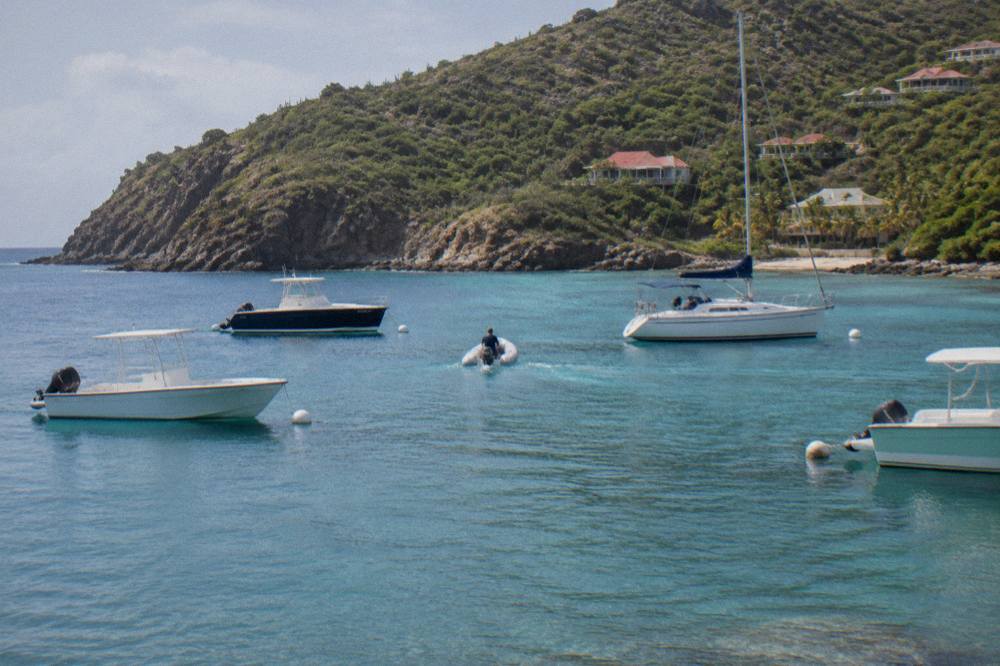
Gustavia, the island's harbour capital, appears on the full-day private routes as a town stop, not a snorkel stop, and St Jean Beach appears as a beach call. Those are the two halves of a St Barts day: water time at the reserve bays, land time in Gustavia. The Full-Day St Barth Private Charter Tour run by Love Boat Sxm, departing Marina de l'Anse Marcel on the French side of Saint Martin, runs about 8 hours and stops at St Jean Beach and Gustavia, from $1,947.52 per group for up to 10 guests, with soda, snorkelling equipment, fuel, a paddle board and a floating mat included and dock fees at St Barthelemy of 40 EUR per boat plus 5 EUR per guest excluded. It carries free cancellation on the listing and a 5.0 rating from just 3 reviews, too few a pool for any star claim.
What The Marine Reserve Rules Say About Turtles In St Barts
Touching a protected marine species, which includes sea turtles and coral, is banned outright in the St Barts reserve, and so are gloves in the water, feeding animals, and taking coral, plants, shells or crustaceans. The speed limit on the water is 5 knots. These rules exist because the animals live here permanently, and they change what a snorkeller should do the moment a turtle appears.
The reserve's published regulations, on the Agence de l'environnement zones page, are the single most useful document a turtle-hoping snorkeller can read, and they are short. In the water, the simple protection zones that cover Colombier and Fourchue prohibit the same things as on land plus two more: gloves, and touching protected species. Turtles are named as an example of a protected species in the reserve's material. So the correct behaviour is simple to state and hard to hold to when a large calm animal is swimming near you: you look, you do not reach, and you give it room to leave.
There is a temptation, on pages like this one, to add soft advice about sunscreen and distances. The reserve authority's published rules do not confirm a sunscreen rule or a specific approach distance, so this page will not invent one. What is confirmed is the ban list: no touching, no gloves, no feeding, no dogs, no dumping, nothing taken from the sea. A snorkeller who follows those is already inside the law and, incidentally, inside the best practice for wildlife viewing anywhere. The 5 knot limit matters to snorkellers too, because it means boats inside the reserve move slowly and quietly around people in the water.
| Reserve rule | What it means for a snorkeller |
|---|---|
| Touching protected species (turtle, coral) is banned | Watch, photograph from a distance, never reach out |
| Gloves are banned in the water | Snorkel bare-handed; there is nothing you need to grip |
| Feeding animals is banned | Do not bring food or chum to attract fish or turtles |
| Taking coral, plants, shells or crustaceans is banned | Leave everything, including empty shells, where it lies |
| 5 knot speed limit on reserve waters | Boats around you move slowly; stay visible near the surface |
| Dogs banned on reserve beaches | Leave pets ashore |
That table is the whole compliance burden for a recreational snorkeller, and it is genuinely short. The reserve also bans jet skis, seabobs, electric surfboards and any thermal or electric propulsion device in its waters, which is why no jet ski product exists around St Barts at all: it is not a gap in the market, it is the law of the park. Anyone hoping to ride a jet ski to a snorkel spot is hoping for something the reserve forbids, and any operator selling such a trip around St Barts would be selling it illegally.
Which St Barts Boat Tours Include Snorkelling Gear
All six live tours bookable through this site include snorkelling equipment on their listings, from the $189 per-person group day to the private charters priced per group. None of them promises turtles or any specific sea life. The differences between them are group size, price structure and what else is on board, not whether you can get in the water.
This is the point where being honest about inventory matters. There are exactly six live products, five of them private charters priced per group between $1,947.52 and $4,816.09, and one per-person group boat day. There are no kayak tours, no dive boats, no scheduled sunset cruises sold here. If a page elsewhere offers you a St Barts snorkel excursion for $49, it is not one of these six, and this site cannot tell you what it is. The roster below is the complete picture.
| Tour | Format and group max | Price as listed | Snorkel gear on the listing |
|---|---|---|---|
| Gustavia, Colombier Beach and Ile Fourchue Tour (Boomerang) | Shared group day, max 40, from Simpson Bay | From $189 per person plus US$20 government fee | Included, plus paddle boards and floating mats |
| Full-Day St Barth Private Charter (Love Boat Sxm) | Private, up to 10, from Anse Marcel | From $1,947.52 per group | Included, plus paddle board and floating mat |
| Private Charter from St Martin to St Barth (Paper Boat) | Private, up to 8, from Anse Marcel | From $2,100 per group | Included, plus giant floating mat |
| Nikki Beach St Barth Charter (Seven Marine) | Private, max 15, from Cole Bay | From $2,120 per group | Professional guide listed; gear not stated |
| 2 Days 1 Night Catamaran (Zephyr) | Private overnight, up to 4, from Grand Case | From $4,816.09 per group | Not stated on the listing |
| Private Sailboat Charter to St Barth (Paper Boat) | Private sailboat, up to 8, Saint Martin | From $2,000 per group | Open bar, snacks and snorkelling gear listed |
Two honest gaps sit in that table. The Nikki Beach charter lists a professional guide, an open bar, beers and sodas, snacks, bottled water and a round-trip private transfer, but does not state snorkelling gear; "not stated" is not the same as "not included", it means the listing does not say, and a question to the operator before booking settles it. The same applies to the overnight catamaran, which lists breakfast, lunch and dinner and excludes lunch in Gustavia and crew tips of 15 to 20 percent customary, and to the sailboat charter, which lists an open bar and snacks on a 7.5 hour run. If getting in the water with a mask is the point of your day, the three tours that state gear outright are the safe bookings.
The per-person group day deserves one more look from the turtle angle, because its format quietly suits the goal. A shared group of up to 40, with floating noodles, a lily pad and paddle boards, spends a long unhurried stop in calm reserve water. That is more float-and-watch time than a whistle-stop itinerary gives you, and floating quietly is the behaviour most likely to leave a turtle undisturbed long enough for you to see it well. The listing carries free cancellation and operates 12 May to 31 August 2027, with an 8 review pool at 5.0, too few to support any rating claim.
How To Behave When A Turtle Appears Near You In St Barts
Stay still or move slowly, keep your hands at your sides, never block the animal's path to the surface, and let it leave first. Touching a turtle is banned by the reserve, and the practical effect of the rule is that the turtle decides the encounter: chase it and it dives, float calmly and it often continues grazing within sight.
The single most valuable thing a snorkeller can learn is that turtles surface to breathe. A turtle that is feeding below will rise, take one or two breaths, and go back down, and a swimmer parked directly above it forces it to choose between its air and its escape route. The courteous position is to the side, at a distance where you can see the whole animal without it having to alter course for you. If it swims toward you, hold still rather than reaching toward it; passive proximity is legal, contact is not.
Fins deserve a mention because most damage snorkellers do is accidental. Kicking coral while staring at a turtle is the classic sequence, and in a reserve where touching coral is as banned as touching the turtle, a careless fin stroke is the same offence. The dive sites marked with the red square and white diagonal carry their own stricter regime, ecological buoys only, and snorkellers in the bays should treat reef with the same care. Keep your fins up, off the bottom, and let your hands do nothing at all.
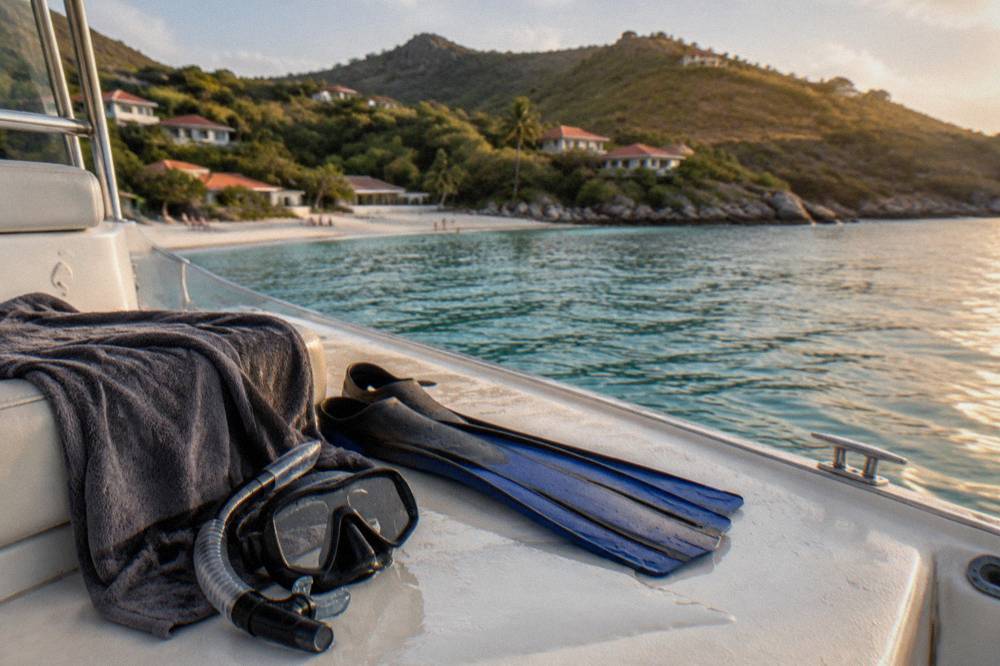
Photography is where good behaviour tends to collapse. There is no reserve rule against cameras, and nothing confirmed about flashes one way or the other, so the honest advice is restraint rather than regulation: a distant photo of an undisturbed turtle is worth more than a close one of a departing one. GoPros on short poles tempt swimmers to close distance; leave the pole retracted. The animals in this reserve are accustomed to slow, quiet visitors precisely because the rules keep it that way, and every snorkeller who behaves well is protecting the next snorkeller's chance.
One behaviour deserves special mention because it is both banned and tempting: feeding. Fish gathered by bread are easy to photograph, and the reserve prohibits feeding animals in its zones outright. Fed fish change their feeding patterns, and the chain runs downstream from there. Bring nothing into the water that a living thing could eat, and take nothing out that a living thing is using.
When The Water Around St Barts Suits Snorkelling Best
By the Meteo-France 1991 to 2020 normals, St Barts is driest in February at 38.4 mm of rain and wettest in October at 135.6 mm, with monthly average highs between 28.5 C in January and 31.7 C in September. The one per-person tour runs 12 May to 31 August 2027, a window that overlaps the start of the Atlantic hurricane season, 1 June to 30 November, without predicting any particular week's weather.
None of that says anything about sea state on your day, because nothing can. What the climate record does is shape the odds around your booking. The drier months, January through April with rainfall of roughly 38 to 52 mm per month, statistically come with more settled days; the wetter months, September through November at roughly 97 to 136 mm, come with more disturbed ones. The hurricane season peak, mid-August to mid-October per the NOAA tropical cyclone climatology definition, sits inside the group boat day's operating window. A late-August booking is a legitimate booking; it simply carries a season's worth of known variability, and the free cancellation listed on the tour is the practical hedge against it.
For snorkelling comfort rather than storm risk, the whole year sits in a narrow warm band: average lows run from 23.3 C in February to 26.3 C in August, and average highs from 28.5 C in January to 31.7 C in September. There is no cold month to avoid. The variables that actually decide whether you enjoy the water are wind and swell on the day, which no published figure here confirms, and which the operators watch themselves. Every charter on the roster reserves judgment on conditions, and the sensible plan is a buffer day in your trip so a postponed outing can move rather than vanish.
Timing within the day matters more than timing within the year, a point our piece on choosing morning or afternoon for a St Barts boat tour covers in detail. Broadly: mornings tend toward calmer air and flatter light into the water, afternoons toward softer light for photography and warmer water after a day of sun. Neither is a turtle guarantee, because nothing is. Pick the slot that suits your body clock and your camera.
What A Turtle-Focused Day From St Martin Actually Costs
The per-person route costs $189 plus a US$20 government fee, the private group route starts at $1,947.52 per group, and the right answer depends almost entirely on your headcount. For a party of eight to ten, the private charters' per-guest arithmetic can land close to the group day price; for a couple or a solo traveller, the group day is the only figure that makes sense.
Run the arithmetic plainly and label it as arithmetic. The Love Boat Sxm full-day charter at $1,947.52 per group for up to 10 guests, divided across a full boat, lands each guest near the same outlay as the group day's per-person price, before the 40 EUR per boat plus 5 EUR per guest dock fees at St Barthelemy that the listing excludes. The Paper Boat motor charter at $2,100 per group for up to 8, rated 5.0 across 17 reviews, the one listing on the roster with enough reviews to quote, works out to a somewhat higher per-guest figure at capacity, with fuel surcharge, unlimited beer, wine and soft drinks, a professional guide, snorkelling equipment and a giant floating mat included and lunch and gratuities excluded. None of those per-guest comparisons is a listed price; they are division, and the group may not fill the boat.
What the private charters buy you, beyond the arithmetic, is control of the itinerary. A private captain can linger where the water is clearest, shorten a stop that is not working, and time Gustavia for lunch rather than for the tide. On a turtle-focused day that flexibility is the real product: the group day goes where it goes on a schedule, and that schedule is built for the average guest, not for the person quietly hoping for one specific animal. Both are good days. They are different days.
The luxury end of the roster exists and is not really a snorkelling decision. The Nikki Beach St Barth private charter from Sint Maarten, from $2,120 per group for up to 15 with a round-trip private transfer, open bar, snacks and a professional guide, is a beach-club-and-boat day; the Zephyr 2 days 1 night catamaran, from $4,816.09 per group for up to 4 with breakfast, lunch and dinner, is the overnight version of the same idea, with a full refund up to 6 days in advance. Either can include water time, but someone choosing them is choosing the format first. Our comparison of catamaran versus ferry for reaching St Barts covers the crossing options, none of which this site sells, in more depth.
For most readers the honest recommendation is the simple one. If you are two or three people travelling in the May to August window, the group day to Colombier and Fourchue from Simpson Bay is the cheapest, lowest-commitment way to float in reserve water with a mask on, and its free cancellation and 7 hour runtime make it an easy fit around a St Maarten stay. If you are six or more, price the private charters before assuming the group day wins. And whichever you take, read the reserve rules in the section above before you get in: the turtles' continued presence in those bays is the direct result of a few short bans being taken seriously by everyone who visits.
A last planning note on getting to the boats at all. Every product on this roster departs from the St Martin and Sint Maarten side, from Anse Marcel, Grand Case, Cole Bay or Simpson Bay, so your day trip begins with a crossing, and the scheduled ferries and flights that make that crossing are sold by other operators, not here. St Barthelemy Tours exists to make sense of exactly this sprawl: which boat, from which dock, at which price, under which rules. Once you are on the water with a mask and a quiet hour in a protected bay, the rest of the machinery falls away.
Common Questions About Snorkeling St Barts Turtles
Snorkeling St Barts Turtles
Turtles are a protected species inside the St Barts marine reserve and a genuine possibility at bays like Colombier and Fourchue, where the boat tours stop. No listing promises a sighting, and touching a turtle is banned outright. Book the day for the water and the reserve, and treat a turtle as the best possible bonus.
Are You Allowed To Touch Sea Turtles In St Barts?
No. The reserve's published rules ban touching any protected marine species, naming turtles and coral as examples, along with wearing gloves in the water and feeding animals. Watching from a respectful distance is the whole of the permitted encounter.
Which St Barts Tour Goes To The Best Snorkel Bays?
The Boomerang group day from Simpson Bay stops at Colombier Beach and Ile Fourchue, both inside the reserve, from $189 per person plus a US$20 government fee, operating 12 May to 31 August 2027. The private charters from Anse Marcel cover similar water on your own schedule, from $1,947.52 per group.
Do Any St Barts Tours Guarantee Seeing Turtles?
None. All six live listings on this site include or imply snorkelling, and not one promises any specific sea life. Sea life, visibility and sea state are variable, and any operator guaranteeing a turtle would be promising something no one can deliver.
Is There A Best Time Of Year To See Turtles Snorkeling In St Barts?
Turtles are present year round in the reserve, and no seasonal sighting figure is confirmed anywhere in the published sources. What the climate record shows is that February is the driest month at 38.4 mm of rain and October the wettest at 135.6 mm, so water conditions statistically favour the drier months, while the only per-person tour runs 12 May to 31 August 2027.
Can Kids Snorkel On These St Barts Boat Tours?
The Boomerang group day lists life jackets in adult and child sizes, paddle boards, floating noodles and a lily pad among its inclusions, which suits families. The private charters take up to 8 or 10 guests depending on the listing, so a family can book the whole boat. The reserve rules on touching wildlife apply to children exactly as to adults.